

Business News
Tinubu Meets Power Generation Companies, Moves To Tackle N4 Trillion Power Sector Debt


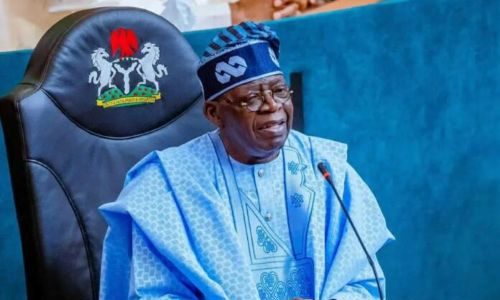
In a decisive move to address one of the most pressing challenges in Nigeria’s power sector, President Bola Ahmed Tinubu on Friday met with chairmen and executives of power generation companies (GENCOs) at the Presidential Villa, Abuja, and pledged to resolve longstanding debt obligations owed to them by the federal government.
At the heart of the meeting was the urgent liquidity crisis threatening the stability of the nation’s electricity market. GENCOs, represented by the Association of Power Generation Companies (APGC) and led by former Niger State governor, Col. Sani Bello (rtd), appealed for intervention to avert an impending breakdown in operations and to secure investor confidence in the sector.
President Tinubu, in his remarks, acknowledged the weight of inherited debts and emphasized his administration’s commitment to transparency, fairness, and a sustainable resolution process.
“I accept the assets and liabilities of my predecessors, and there is no question about that. But that acceptance must be on credible grounds,” the President said. “I need to wear the audit cap of verifiability, authenticity, and the fact that this inheritance is not a mere deodorant but a support structure for critical economic and industrial promotion.”
The Special Adviser to the President on Energy, Mrs. Olu Verheijen, disclosed during the meeting that the President has granted anticipatory approval for a N4 trillion bond programme aimed at tackling the massive liquidity shortfall in the electricity value chain.
According to Verheijen, this debt, accumulated over a decade, is largely due to unfunded tariff shortfalls and market inefficiencies. She stated that the Nigerian Bulk Electricity Trading Company (NBET) has verified N1.8 trillion of the N4 trillion claimed by GENCOs between 2015 and 2023, while the remainder is undergoing a rigorous validation process.
“We have sat with 27 GENCOs to assess their Power Purchase Agreements and gas supply contracts. As of April 2025, the federal government’s verified exposure is ?4 trillion, but that figure may be revised downward following the ongoing audits,” she explained.
She added that the Debt Management Office (DMO) will only issue bonds against verified claims, ensuring fiscal discipline and contractual accountability.
While reaffirming his belief in a private sector-led electricity market, President Tinubu appealed for patience from GENCOs and financial institutions. He urged banks to work with operators rather than resort to asset foreclosures, which could destabilize the entire sector.
“To our friends in the banking sector, I ask that we avoid foreclosures. Sharpen your pencils, but keep an eraser handy. Let’s persevere together,” he said.
Describing electricity as “the most important discovery of humanity in the last 1,000 years,” President Tinubu reiterated that access to stable power is vital for economic growth and national development.
He further stressed that reforms already underway—including the removal of fuel subsidies and the push for Compressed Natural Gas (CNG) alternatives—are helping to redirect resources toward improving infrastructure and service delivery.
Speaking at the meeting, Minister of Power, Chief Adebayo Adelabu, commended President Tinubu for his leadership and unwavering attention to the power sector. He highlighted several achievements of the administration, including: signing the Electricity Act, 2023, which decentralizes power generation and regulation; launching Nigeria’s first Integrated National Electricity Policy in 24 years; attracting over $2 billion in new private capital for power sector expansion; growing annual sector revenue from N1 trillion in 2023 to N1.7 trillion in 2024, reducing government subsidies by over ?700 billion; expanding installed generation capacity from 13,000 MW to 14,000 MW, with a peak output of 5,801 MW and daily energy delivery of 120,370 MWh as of March 4, 2025; achieving zero national grid collapse in 2025 under the Presidential Power Initiative; and procuring 3.45 million smart meters, with 300,000 already deployed under the World Bank-supported Distribution Sector Recovery Programme (DISREP) and the N700 billion Presidential Metering Initiative.
However, Adelabu warned that despite these milestones, the liquidity crisis poses a grave threat to the sector’s sustainability.
“Given the grave implications of this debt overhang, including the risk of a nationwide shutdown of generation assets, I humbly seek your immediate support for defraying these obligations, even if partially, over a defined period,” he appealed to the President.
Two key private sector voices—Tony Elumelu, Chairman of Transcorp Power, and Kola Adesina, Group Managing Director of Sahara Group—used the platform to highlight the critical state of the sector and the need for swift government intervention.
“Mr. President, we’ve come to you as a last hope. The generating companies are heavily indebted to banks, and foreclosure threats are real—not because we’re not doing our jobs, but because the system owes us trillions,” Elumelu said.
He commended the administration’s efforts in stabilizing oil production and strengthening investor confidence, noting that Nigeria now retains 98% of its daily oil production—up from just 3% before Tinubu took office.
“We don’t need power to complete your transformation—we need power to enable it,” Elumelu added. “Power is critical to unlocking Nigeria’s full potential.”
Adesina echoed the need for urgent liquidity support and called attention to gas supply challenges facing generation companies.
“Liquidity is the oxygen of our business. Without urgent intervention, generation capacity will stall,” he warned. “Plants in the Afam axis are underperforming because we have not paid gas suppliers. We propose unlocking 800 million cubic feet of gas through NLNG to boost supply to these power plants.”
The meeting was attended by several top government officials, including Chief of Staff to the President, Femi Gbajabiamila; Coordinating Minister of the Economy and Finance, Wale Edun; Minister of Information and National Orientation, Mohammed Idris; and other senior stakeholders from regulatory agencies and the electricity value chain.
As Nigeria continues its energy transition journey, the outcome of this engagement is expected to set the tone for a more bankable, reliable, and investor-friendly electricity market—one that aligns with the administration’s Renewed Hope Agenda and broader economic revival strategy.




-

 Society News5 years ago
Jamaican man beheads wife after finding out their 6 kids are not his
-
 Society News7 years ago
EXCLUSIVE: The Complete Story of Dolapo Awosika, John Fashanu and Prophet Kasali Sex Mess
-
 News6 years ago
Pastor Osagie Ize-Iyamu, His Membership Of Secret Cult, And Other Issues Touching On His Public Credentials Examined by Barr. PATRICK I. BIOSE
-

 News6 years ago
BREAKING: Ajimobi’s daughter-in-law blast Gov. Makinde, says gov can’t surpass ex-Oyo gov
-

 Society News6 years ago
The Rise and Fall of “Jumoke The Bread Seller”
-

 News6 years ago
BREAKING: 2 arrested as NAF begins investigations into Tolulope’s death
-
 Crime6 years ago
Exclusive: Female Aide Fingered In Oko Oloyun’s Murder + Banking Transactions That Nailed Husband
-

 News6 years ago
BREAKING: Police take over Edo House of Assembly as APC, Oshiomhole move to seize control


You must be logged in to post a comment Login