

Featured
The Price of Silence: When The Rich Refuse To Look Away


Olabode Opeseitan
Nigeria has become a country where silence is the currency of survival. It is hero-worshipped, cloaked in awe, and mistaken for wisdom. “Silence is golden,” they say. Yet one billionaire chose noise. It wasn’t the clanging of refinery pipes or the hum of boardroom deals, but the kind that rattles the conscience of a nation.
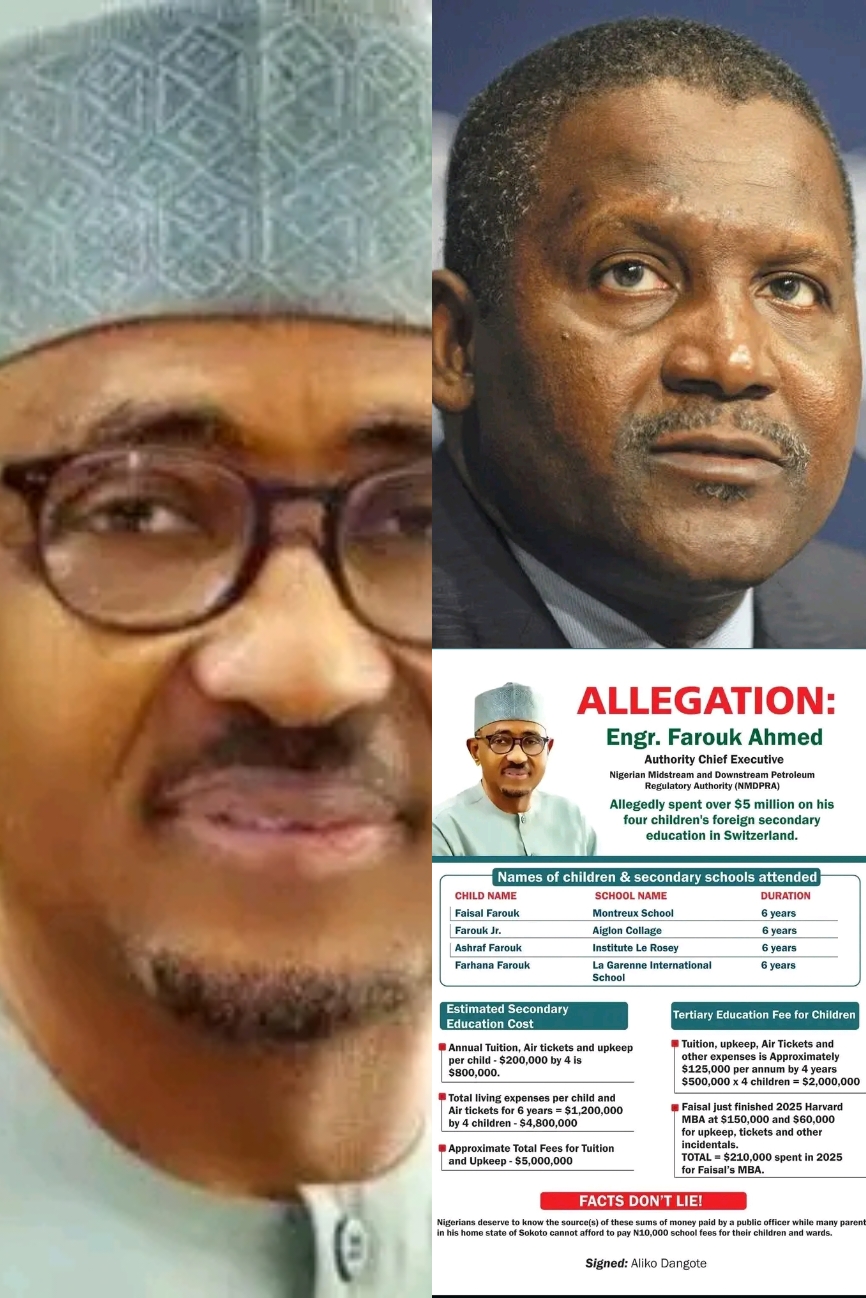
At a press briefing in Lagos, Dangote did the unusual for people in his class: he named names. The target? Engr. Farouk Ahmed, Chief Executive of the Nigerian Midstream and Downstream Petroleum Regulatory Authority (NMDPRA). The charge? Spending $5 million on the secondary education of four children in Switzerland, an amount Dangote insists is incompatible with a public servant’s salary.
This wasn’t a casual jab. It was a full-throated indictment, delivered with the precision of a man who knows the cost of silence. “My children went to school in Nigeria,” Dangote said. “I want to understand what kind of system we are running, where public officials can afford this while millions of Nigerians are struggling.”
Quarrel Beneath the Barrels
But this is not just about tuition. It’s about power. Dangote’s refinery, Nigeria’s $20 billion bet on self-sufficiency, is being undercut by NMDPRA’s alleged issuance of “reckless” fuel import licenses, including from Russia.
The billionaire sees this as sabotage, a deliberate attempt to frustrate local refining and protect entrenched interests. Farouk Ahmed, meanwhile, has not publicly responded, but over 50 civil society organizations have rallied to his defense, accusing Dangote of trying to monopolize the sector and undermine regulatory independence.
Yet the defense rings hollow. Civil society organizations, once the moral compass of the nation, now appear as mercenaries in the service of impunity. They have taken Nigeria deeper into the abyss of disrepute. These CSOs, meant to be the conscience of the republic, have become the first line of defence for corruption. No shame. No remorse. Just press releases and paid indignation.
The Spectacle of Impunity
The real tragedy isn’t the alleged $5 million; it’s what funds like that could have built. A hospital in Sokoto. A school in Zamfara. A road in Bayelsa that doesn’t turn into a death trap during the rainy season. But in Nigeria, corruption is not just theft, it’s a redistribution of suffering. The poor pay with their lives so the powerful can pay for Swiss boarding schools.
And when the accused are finally cornered, they summon their retinue of Senior Advocates of Corruption Enablers, legal gladiators who twist the law into a shield for pen robbers. Their robes are clean, but the conscience beneath is threadbare.
China’s Message in Blood
Earlier this month, China executed Bai Tianhui, former general manager of China Huarong International Holdings, for accepting bribes totaling $157 million. No reprieve. No delay. The Supreme People’s Court called his crimes “exceptionally serious,” with “egregious social impact.” It was a message written in finality: corruption will not be tolerated, even at the highest levels.
Lessons from the Uncompromised
• Singapore: With a CPI score of 83, Singapore’s zero-tolerance policy, independent anti-corruption bureau, and swift prosecution have made it one of the cleanest governments globally. The result? High investor confidence, efficient public services, and a culture where corruption is the exception, not the norm.
• Denmark: Topping the CPI at 90, Denmark’s success lies in transparency, civic engagement, and a judiciary that doesn’t flinch. Corruption is rare, and when it surfaces, it’s dealt with decisively. The payoff? A society where public trust is not a myth but a metric.
The Furnace of Reckoning
For anything relating to corruption, Nigeria must become a furnace where truth is cast, not negotiated. If public officers know they’ll escape with a slap on the wrist, they will keep dipping their fingers into the public till. But if they know the system will scorch them with consequences, they will think twice before turning governance into a heist.
The question is no longer whether Nigeria will change. It’s whether it will burn away the rot, or be consumed by it.
Dangote Industries
DANGOTE FOUNDATION
Asiwaju Bola Ahmed Tinubu
Economic and Financial Crimes Commission
#EFCC
#ICPC
#Swiss
#Nigeria
#nigeriansindiaspora
#civilsociety
#NMDPRA




-

 Society News5 years ago
Jamaican man beheads wife after finding out their 6 kids are not his
-
 Society News7 years ago
EXCLUSIVE: The Complete Story of Dolapo Awosika, John Fashanu and Prophet Kasali Sex Mess
-
 News6 years ago
Pastor Osagie Ize-Iyamu, His Membership Of Secret Cult, And Other Issues Touching On His Public Credentials Examined by Barr. PATRICK I. BIOSE
-

 News6 years ago
BREAKING: Ajimobi’s daughter-in-law blast Gov. Makinde, says gov can’t surpass ex-Oyo gov
-

 Society News6 years ago
The Rise and Fall of “Jumoke The Bread Seller”
-

 News6 years ago
BREAKING: 2 arrested as NAF begins investigations into Tolulope’s death
-
 Crime6 years ago
Exclusive: Female Aide Fingered In Oko Oloyun’s Murder + Banking Transactions That Nailed Husband
-
 News6 years ago
BREAKING: Police take over Edo House of Assembly as APC, Oshiomhole move to seize control


You must be logged in to post a comment Login