

Crime
Terrorism Trial Of Simon Ekpa Opens In Finland Over Alleged Role In Nigeria Unrest


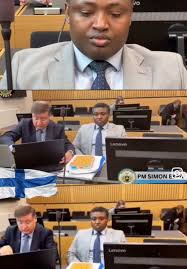
The long-awaited terrorism trial of Simon Ekpa, a Nigerian-Finnish lawyer and self-proclaimed separatist leader, began Thursday at the Päijät-Häme District Court in Lahti, drawing significant international attention and intense media scrutiny.
Finnish prosecutors are seeking a six-year prison sentence, accusing Ekpa of inciting violence and supporting terrorist activities tied to the pro-Biafra separatist movement in southeastern Nigeria. Authorities allege that Ekpa orchestrated a deliberate campaign of online propaganda and incitement, using platforms such as YouTube, X (formerly Twitter), and Facebook.
According to the prosecution, Ekpa leveraged his substantial online following to encourage civil disobedience, violent resistance, and regional lockdowns in Nigeria’s Igbo-majority southeastern states. They claim these messages directly contributed to attacks by armed groups believed to be affiliated with separatist militias.
Charges and Allegations
Ekpa faces several serious charges, including:
- Participation in a terrorist group
- Public incitement to commit crimes for terrorist purposes
- Aggravated tax fraud
- Violations of Finland’s Attorneys Act
The Finnish National Bureau of Investigation (KRP) began probing Ekpa’s activities in early 2023 following mounting diplomatic pressure and formal complaints from the Nigerian government, which regards Ekpa as a central figure in the recent surge of separatist violence.
Nigerian authorities allege that his rhetoric has fueled numerous attacks on police stations, government offices, and civilians who defied “sit-at-home” orders enforced by unknown armed factions. Ekpa, who styles himself as the Prime Minister of the “Biafra Republic Government in Exile,” continues to maintain a strong and vocal digital presence in support of the Biafra movement.
Ekpa has pleaded not guilty to all charges. His attorney, Juhani Hietanen, denounced the case as politically motivated and cast doubt on the credibility of evidence obtained from Nigeria.
“The reliability and admissibility of this evidence must be closely scrutinized,” Hietanen told reporters. “Much of it originates from a country where due process is often compromised by political considerations.”
The trial is expected to continue for several days, with testimonies from expert witnesses in digital forensics, social media influence, and African political movements. Prosecutors are set to present video clips, social media posts, and financial records, including tax documents, to substantiate both the terrorism and fraud charges.
Legal scholars have described the case as unprecedented in Finland, given its international dimensions and the broader implications for cross-border digital activism.
Reactions in Nigeria have been divided. Some view the trial as a long-overdue reckoning for separatist agitators believed to be destabilizing the country. Others, particularly among the Igbo diaspora and pro-Biafra supporters, see it as a politically motivated attempt to suppress dissent.
The Nigerian government welcomed Finland’s legal actions. The Ministry of Justice stated that it is monitoring the proceedings closely and is prepared to cooperate further with Finnish authorities.
Ekpa’s case is one of the rare instances in which a European country is prosecuting a citizen for alleged terrorist activity linked to conflict in another continent. It raises thorny legal questions about international jurisdiction, free speech, and the influence of diaspora activism in the digital age.
As the Päijät-Häme District Court weighs the evidence, the verdict—expected in June—could have far-reaching consequences for how nations confront online political extremism with global implications.




-

 Society News5 years ago
Jamaican man beheads wife after finding out their 6 kids are not his
-
 Society News7 years ago
EXCLUSIVE: The Complete Story of Dolapo Awosika, John Fashanu and Prophet Kasali Sex Mess
-
 News6 years ago
Pastor Osagie Ize-Iyamu, His Membership Of Secret Cult, And Other Issues Touching On His Public Credentials Examined by Barr. PATRICK I. BIOSE
-

 News6 years ago
BREAKING: Ajimobi’s daughter-in-law blast Gov. Makinde, says gov can’t surpass ex-Oyo gov
-

 Society News6 years ago
The Rise and Fall of “Jumoke The Bread Seller”
-

 News6 years ago
BREAKING: 2 arrested as NAF begins investigations into Tolulope’s death
-
 Crime6 years ago
Exclusive: Female Aide Fingered In Oko Oloyun’s Murder + Banking Transactions That Nailed Husband
-

 News6 years ago
BREAKING: Police take over Edo House of Assembly as APC, Oshiomhole move to seize control


You must be logged in to post a comment Login