

Featured
President Tinubu’s Quiet Grooming Of Reform Technocrats To Reinvigorate Nigeria’s Fiscal Architecture


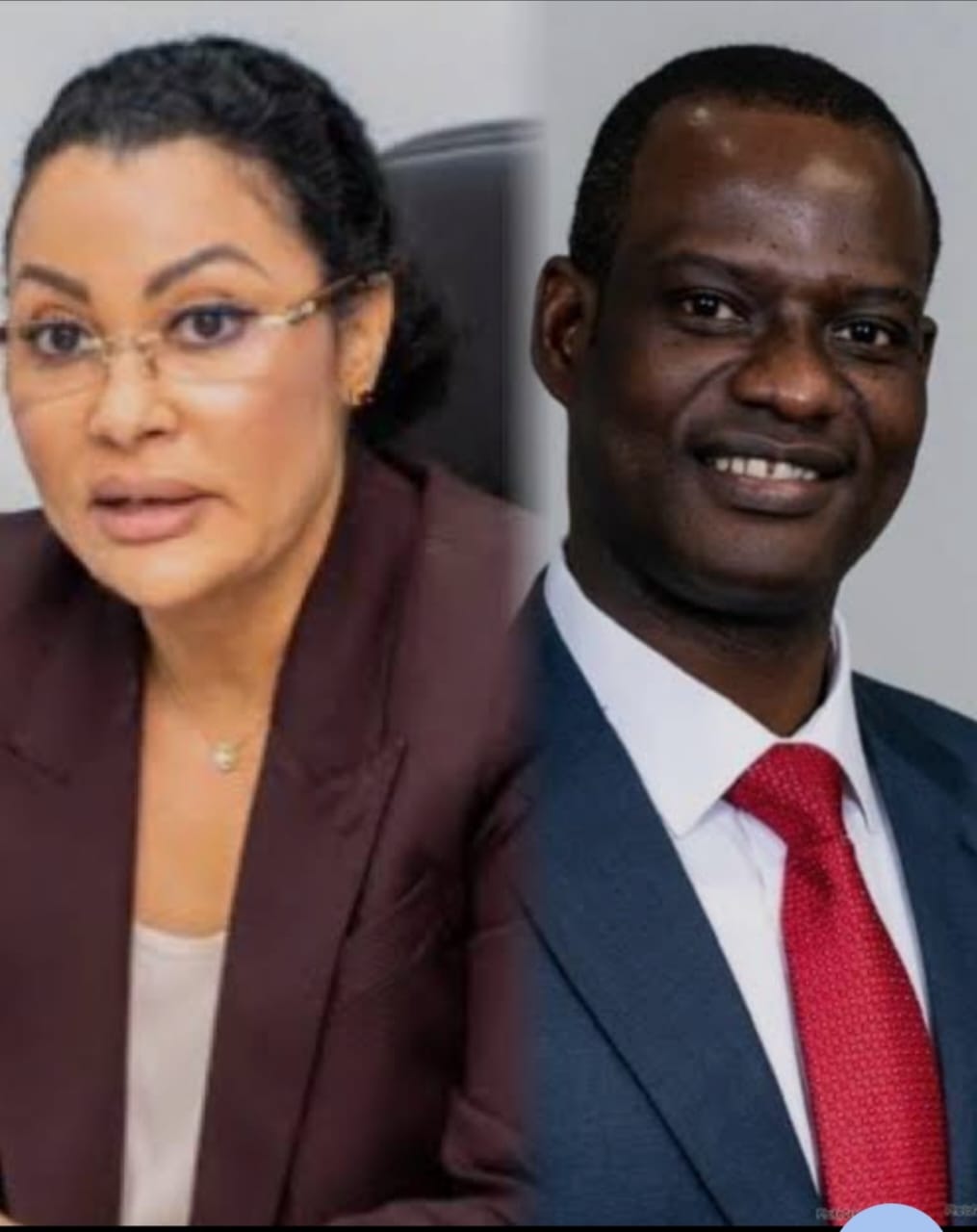
By Prince Adeyemi Shonibare
Leadership in economic governance is rarely accidental. The most effective administrations deliberately cultivate technocrats, deploy them strategically, and gradually prepare them for larger national responsibilities.
The emerging configuration within the economic management team of President Bola Ahmed Tinubu increasingly suggests such a long-term design.
At the centre of this evolving architecture are two reform-minded technocrats whose rising profiles within the administration have attracted attention in policy and economic circles: Dr. Doris Uzoka-Anite and Dr. Taiwo Oyedele. Their expanding responsibilities reflect not only professional competence but also the president’s apparent intention to reinvigorate the fiscal institutions responsible for Nigeria’s economic direction.
Nigeria’s economic governance structure rests heavily on two critical ministries: the Ministry of Finance and the Ministry of Budget and Economic Planning. Currently led by Wale Edun and Abubakar Bagudu respectively, these institutions form the twin pillars of fiscal management, revenue mobilization, and national budget coordination.
Yet within government circles it is acknowledged that the performance of the federal budget has not entirely met the expectations of Mr. President. The challenge lies largely in the delicate coordination between fiscal planning and financial execution—an issue common to many emerging economies where policy design and implementation do not always move at the same speed.
It is against this backdrop that President Tinubu appears to be strengthening both ministries by positioning younger technocrats with reform energy, intellectual depth, and institutional flexibility to work closely within the system. In this evolving structure, Dr. Oyedele’s fiscal reform expertise and Dr. Uzoka-Anite’s expanding role within economic planning signal an attempt to inject renewed dynamism into Nigeria’s fiscal governance framework.
Few policy experts understand Nigeria’s evolving tax architecture as deeply as Dr. Taiwo Oyedele. As chairman of the Presidential Fiscal Policy and Tax Reforms Committee, he played a central role in designing the framework for Nigeria’s ongoing tax transformation. It is therefore both logical and fair that the same architect who helped midwife the reform should also be closely involved in its interpretation and implementation within the Ministry of Finance.
Fiscal reform requires continuity between policy conception and execution. Without such continuity, the philosophical foundations of reform often weaken once the policy enters the bureaucratic machinery.
As the renowned economist John Maynard Keynes famously observed, “The difficulty lies not so much in developing new ideas as in escaping from old ones.” Nigeria’s tax reform programme requires precisely this kind of intellectual continuity. Dr. Oyedele’s involvement helps ensure that the original policy vision remains intact as the reforms transition from conceptual frameworks into operational realities.
Dr. Oyedele’s professional credibility is rooted not only in policy experience but also in strong academic training. He holds a degree in Accounting and is a chartered tax professional with multiple international certifications in taxation, fiscal policy, and public finance management.
Before his current national assignment, he built an international reputation as a tax expert and fiscal policy strategist, serving as Africa Tax Leader at PricewaterhouseCoopers.
His work across multiple jurisdictions provided extensive experience in tax policy design, fiscal systems, and revenue optimization—expertise now being applied to Nigeria’s economic transformation agenda.
Equally notable is the trajectory of Dr. Doris Uzoka-Anite within the Tinubu administration. Having previously served at the Ministry of Industry, Trade and Investment, Minister of State for Finance before her redeployment to the Ministry of Budget and Economic Planning, her continued presence within the president’s economic team signals deep presidential confidence.
Dr. Uzoka-Anite brings a distinctive professional background to governance. She holds a Bachelor of Medicine and Bachelor of Surgery (MBBS) degree from the University of Benin and later expanded her professional training into banking, finance, and public administration. Her transition from medicine into finance and economic policy reflects a rare multidisciplinary career path that has strengthened her approach to governance.
Before joining the federal cabinet, she served as Commissioner for Finance in Imo State, where she managed fiscal operations, revenue administration, and public financial management reforms. Her combination of medical training, banking experience, and government administration has shaped her reputation as a pragmatic policy manager.
Her movement across different economic ministries under the Tinubu administration—from commerce and investment policy to national economic planning—represents an accumulation of strategic governance experience that few technocrats acquire within such a short period. Indeed, the opportunities and institutional exposure she is gathering cannot be purchased in any university anywhere in the world.
Following her redeployment, she expressed profound gratitude to the president for the opportunity to continue serving the country in different capacities.
In her remarks she noted:
“I am deeply grateful to Mr. President for the confidence reposed in me. The opportunity to serve Nigeria in different capacities within this administration is both an honour and a responsibility.”
Beyond national service, the breadth of experience she is acquiring also positions her for potential roles at the international level in global economic and development institutions, where technocrats with cross-sector governance exposure are often highly valued.
Observers familiar with President Tinubu’s governance style often point out that this approach reflects a leadership philosophy he deployed during his tenure as governor of Lagos State. During that period, technocrats were deliberately cultivated and empowered within the state’s economic management architecture.
One notable example was Pastor Ben Akabueze, who worked within Lagos’ fiscal management team for 12 years during Tinubu’s administration and continued under Governor Babatunde Fashola for several years. Akabueze later moved to the federal level where he served as Director-General of the Budget Office under President Muhammadu Buhari.
The pattern suggests that President Tinubu believes in grooming technocrats over time, gradually expanding their responsibilities while strengthening institutional capacity.
If one carefully reads the president’s administrative signals, the current positioning of Dr. Oyedele and Dr. Uzoka-Anite may well represent the early stages of a leadership transition within Nigeria’s fiscal governance structure. Should President Tinubu secure a second term, both technocrats could emerge as top-ranking substantive ministers, potentially stepping into the roles currently occupied by Wale Edun at Finance and Abubakar Bagudu at Budget and Economic Planning.
Such a development would represent not merely a change of personnel but the culmination of a deliberate technocratic grooming process.
Beyond the individuals involved, the broader implication is that the president appears to be building a new generation of economic managers for Nigeria. Some operate visibly at the forefront as ministers, while others work quietly behind the scenes as special advisers, reform architects, and policy strategists.
Together they represent a cohort of younger technocrats positioned to shape Nigeria’s economic future.
As Nobel Prize–winning economist Paul Krugman once observed, “Productivity isn’t everything, but in the long run it is almost everything.”
For Nigeria, productivity in governance—especially in fiscal management, taxation, and economic planning—will ultimately determine whether the country unlocks its vast economic potential.
If the current technocratic grooming within the Tinubu administration continues along this trajectory, Nigeria may indeed be witnessing the emergence of a new generation of economic leadership.
And if that vision holds, the message is clear: Nigeria’s future is being built not only by those at the forefront of government, but also by a growing cadre of reform-minded technocrats working tirelessly,some in the spotlight, others behind the curtains to secure the nation’s economic destiny.




-

 Society News5 years ago
Jamaican man beheads wife after finding out their 6 kids are not his
-
 Society News7 years ago
EXCLUSIVE: The Complete Story of Dolapo Awosika, John Fashanu and Prophet Kasali Sex Mess
-
 News6 years ago
Pastor Osagie Ize-Iyamu, His Membership Of Secret Cult, And Other Issues Touching On His Public Credentials Examined by Barr. PATRICK I. BIOSE
-

 News6 years ago
BREAKING: Ajimobi’s daughter-in-law blast Gov. Makinde, says gov can’t surpass ex-Oyo gov
-

 Society News6 years ago
The Rise and Fall of “Jumoke The Bread Seller”
-

 News6 years ago
BREAKING: 2 arrested as NAF begins investigations into Tolulope’s death
-
 Crime6 years ago
Exclusive: Female Aide Fingered In Oko Oloyun’s Murder + Banking Transactions That Nailed Husband
-

 News6 years ago
BREAKING: Police take over Edo House of Assembly as APC, Oshiomhole move to seize control


You must be logged in to post a comment Login