

Featured
On The Killing Of Brigadier Gen..Uba And The Future Of Our National Security


By: Shehu Bashir, Esq.
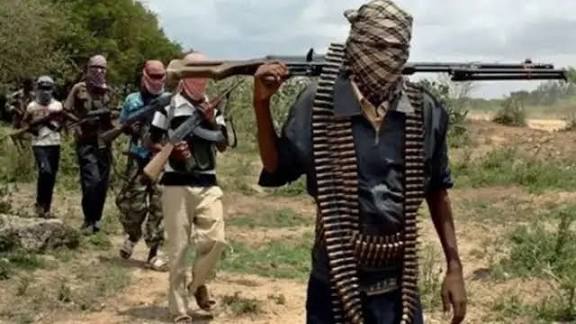
I have two principal perspectives on the troubling events that culminated in the ambush of the military convoy and the subsequent capture—or recapture—of the martyred General.
First, I suspect there may be satellite-backed support for ISWAP, enabled by a global data management system capable of pinpointing anyone’s exact location anywhere in the world. This, in my view, could explain the initial ambush.
It is difficult to assume that ISWAP alone possesses the level of sophistication required to identify such precise coordinates—unless the General’s rescue location had been tracked and relayed to them through advanced GPS-based intelligence. I stand to be corrected, but it is unlikely that barely literate terrorists, many of whom can neither read nor write, are independently able to produce such geospatial accuracy.
This raises deeper questions:
What do foreign governments or foreign-backed agents know about this possible satellite compromise? How have terrorists consistently targeted precise locations with such accuracy? And most importantly—who is compromising our national security?
Secondly, I have long argued that media leaks involving sensitive security information should never be dismissed as ordinary journalism. If a leak undermines national security—especially one that results in fatalities among our servicemen—such an act should be treated as treasonous and attract military-grade consequence. No human-rights argument or so-called civil liberty should supersede national and international security imperatives.
It is for good reason that the Department of State Services (DSS) recently dismissed some personnel for criminal breach of trust, including the disclosure of official secrets. This underscores the grave danger in treating the leaking of national security information as a minor infraction.
We often allow ourselves to be intimidated by public noise or fear of criticism when decisive action is required. Yet, an unpunished crime on one hand is an invitation to further crimes on the other.
I do not know who leaked the WhatsApp messages that compromised the geolocation of the slain General, but every effort must be made to identify and punish those responsible.
In the same vein—and I state this with utmost seriousness—Yele Sowore and Sahara Reporters should be treated as persons of interest in this tragic incident. We must trace the channels through which this critical intelligence was exposed. Doing so may help uncover other breaches of national security that Sahara Reporters has used to gain attention and revenue.
We are in a war. Our national security is hanging on the edge. Our cohesion and sovereignty are under threat. We are being pressured by a foreign military over perceived lapses in our security strategy. If ever there were a time to be firm, resolute, and uncompromising against the enemies of our country, this is it.
Any act—whether framed as journalism, activism, or political expression—that sabotages ongoing security efforts must be met with the seriousness it deserves.
We cannot continue losing our servicemen and women because of internal betrayal and still behave as though nothing is amiss. We cannot keep tolerating conspiracies motivated by financial gain at the expense of our survival.
This is one compromise too many. We must put an end to it—as a nation, as a people, and as citizens committed to peace and security.
GOD IS HERE.




-

 Society News5 years ago
Jamaican man beheads wife after finding out their 6 kids are not his
-
 Society News7 years ago
EXCLUSIVE: The Complete Story of Dolapo Awosika, John Fashanu and Prophet Kasali Sex Mess
-
 News6 years ago
Pastor Osagie Ize-Iyamu, His Membership Of Secret Cult, And Other Issues Touching On His Public Credentials Examined by Barr. PATRICK I. BIOSE
-

 News6 years ago
BREAKING: Ajimobi’s daughter-in-law blast Gov. Makinde, says gov can’t surpass ex-Oyo gov
-

 Society News6 years ago
The Rise and Fall of “Jumoke The Bread Seller”
-

 News6 years ago
BREAKING: 2 arrested as NAF begins investigations into Tolulope’s death
-

 Crime6 years ago
Exclusive: Female Aide Fingered In Oko Oloyun’s Murder + Banking Transactions That Nailed Husband
-
 News6 years ago
BREAKING: Police take over Edo House of Assembly as APC, Oshiomhole move to seize control


You must be logged in to post a comment Login