

Featured
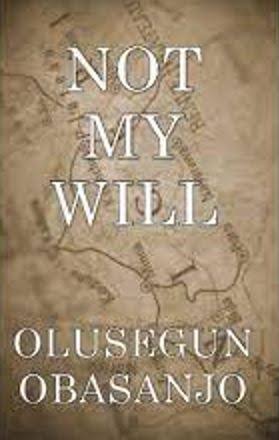
Obasanjo’s “Not My Will,” A Review With A Rejoinder


By Professor Ladipo Adamolekun
Fair comment on any piece of writing would require that the author’s objective should be the reviewer’s major reference point. The objective of Not My Will (Ibadan, 1990) is stated in the Introduction as follows: “I have endeavoured to put this book out before the third republic and early in the last decade of the twentieth century as part of my contribution to making the decade a period of soul-searching, deep sober reflection, stability, progress, development, peace and cooperation through the lessons of history for all of us, individually and collectively.”
What contributions does this book make towards enabling Nigerians to rise to the challenges of the 1990s and beyond? I would venture to say that it makes three main contributions. First, it provides an insider’s account of the complexities and intricacies of running a federal system in the Nigerian milieu. General Obasanjo is the first leader at the federal level to have given an account of his stewardship in writing.
“Not My Will” is, therefore, a welcome addition to our knowledge of the running of regional governments by the first three premiers: Alhaji Ahmadu Bello, Chief Obafemi Awolowo and Dr. Nnamdi Azikiwe. Those who aspire to rule Nigeria under the third republic and in the foreseeable future would benefit from reading all the four books.
Second, General Obasanjo provides insights on some issues that will continue to feature prominently in the governance of the country: national census, religion, national integration, economic management, and international relations.
I find his views on national census and religion eminently sensible. Without prejudging the work of Alhaji Shehu Musa and his team, faithful implementation of the strategy spelt out in the book (pp. 53-55) appears to be a more promising road to the achievement of a reliable and acceptable census in the country. In addition to the useful insights, he has provided on “Sharia politics”, General Obasanjo has also demonstrated his own personal; religious tolerance by worshipping both in a Baptist church and a mosque after his “triumphant” return to Abeokuta in October 1979. Those involved in the Organisation of Islamic Council (OIC) fiasco have committed the serious crime of bringing religion to the centre stage of Nigerian politics.
This dangerous trend has to be reversed and religion must be kept serenely as a private affair of individual Nigerians.
On national integration, this reviewer is convinced that General Obasanjo is a genuine believer in one Nigeria. Anyone who has read My Command, Nzeogwu, Constitution for National Integration and Development, together with Not My Will is likely to agree with this verdict.
It does appear that he genuinely and consistently sought to rely on a “national caucus of advisers” (p.170). However, it would also be correct, in my opinion, to assert that certain actions that he took in the name of promoting national integration were based on wrong assumptions and were, therefore, counterproductive.
My two favourite examples are the location of some industries and the posting of university vice chancellors like police commissioners or military commanders without regard for the peculiarities of university culture. As an insider of the Nigerian university system at the time, I make bold to declare that this action hastened the decline of the universities by bastardising the appointment of their chief executives. Unfortunately, General Obasanjo continues to believe that the end of national integration justifies whatever means he adopted.
On economic management, the lesson to learn from the account in this book is that only limited concrete results can be achieved in the absence of a clearly thought-out and coherent economic policy framework. Unlike the political programme with a definite end-product and a well-articulated sequencing, the Murtala-Obasanjo administration had no economic programme.
The regime weas guided by a mixture of pragmatism, economic nationalism (the “commanding heights” of the economy idea), and a belief in efficient management. Overall, the regime’s record in the field of economic development was patchy.
There were some concrete achievements in agriculture and transportation but the problem of telecommunication persisted in spite of huge investments. And it is difficult to rate the regime highly in financial management, especially the controversial jumbo loan decision in a period of relative affluence.
Chapter 7 on “International Relations” is a succinct account of how our foreign policy came of age. It is arguable that we could have achieved more but the Murtala-Obasanjo administration richly deserves credit for launching the country on the path of an assertive foreign policy. General Obasanjo certainly contributed significantly to this achievement.
However, reading between the lines in the chapter, there are clear warnings that our persistent inability to keep our domestic problems under control will continue to constitute a drag on our foreign policy.
The third contribution of this book relates to General Obasanjo’s leadership style. I must confess that I find it difficult to separate elements of the General’s leadership style that derive from his military profession from those that derive from the combination of his religion, cultural and educational backgrounds. It is very likely that all of these elements combined in an inextricable manner to produce what emerges in the book as the General’s leadership style.
There is evidence of courage, a touch of abrasiveness, dedication, hard work and integrity. His commitment to a consensual approach to politics almost amounts to an article of faith.
The consistent use of task forces and study panels, and the periodic “Saturday meetings” in Doddan Barracks (essentially brainstorming sessions), were all in the pursuit of consensus politics. Of course, this did not evolve into a system of governance (the time was obviously too short) but some practical illustrations of its merits are provided in the book.
I would like to put on record two reservations about this book. The first relates to the ad hominem references made in different parts of the book. Those whose advice General Obasanjo sought in writing this book are not named, deliberately I would imagine.
Similarly, in a few instances where uncomplimentary comments are made about individuals, no names are provided: the eye specialist who metamorphosed into a crude lobbyist and the corrupt “two star” General. In practically all cases of praise, the names are provided. I would consider all this desirable.
In contrast, I think that the majority of the cases where persons are named for negative comments could have been avoided without detracting from the usefulness of the book for the achievement of the author’s stated objective.
Notable examples are the references to Alhaji Sule Katagun, Justice Elias, and General Oluleye. On late Chief Obafemi Awolowo and his party, the Unity Party of Nigeria (UPN), General Obasanjo has clearly sought to settle a score. This could have been avoided. He could have simply limited himself to a few paragraphs on both the Chief and his party as he did for the other political leaders of the second republic. Given the General’s new “large constituency… as large as the world itself” (p.65), a significant proportion of Chapter 9 is inappropriate (especially pp.182, 188, 196-202). Would the General consider expunging these pages from a reprinted edition of the book? I was very sad to read of the attempt to assassinate the General in Ibadan (p.224).
My second reservation is that writing ten years after the events, General Obasanjo did not stand back sufficiently to enrich his contributions with some of the useful lessons he must have learnt from having the world as his new “constituency”. The closest he comes to doing this is the strong case he makes for democratic politics (pp.1-2).
There are no real indications about how he would like to see the institutions he criticizes so trenchantly strengthened to enable them play their respective roles in the 1990s and beyond: the civil service, labour unions, the press, universities, and the judiciary. One can only hope that he would address these important issues within the framework of his excellent African Leadership Forum initiative.
Although General Obasanjo lavishes praise on his publishers, careful and detailed editing should be carried out before the book is reprinted. The book also deserves a better index; the existing one appears hurriedly done and is most inadequate.
July 25, 1990.
A Rejoinder
Let me take three issues in your review that I disagree with.
Our economic policy was self-sufficiency through self-reliance and that take with it those factors which you acknowledge – economic pragmatism, economic nationalism, and efficient management among others.
That economic policy framework was not without success in self-sufficiency in rice and poultry production, consciousness and awareness raising in agriculture and food production and encouragement of light industries in furniture, domestic and household goods and grounding of the economy in base industries of iron and steel, petrochemical and infrastructures of roads, fuel depots, and pipelines although the incoming administration short-circuited and frustrated some of the achievements and successes in this regard.
As for my comments on political leaders and their organisations, I go by the parable of the talents which in summary says to whom much is given, much is to be expected. You got it right when you said that national integration is of primary concern to me.
Unless we have uniformity of purpose, we are not going to make progress. We are not going to have integration unless we work consciously, assiduously and arduously for it. If posting university Vice Chancellors as Customs officers is one of the ways of working for it so be it. Our universities have not evolved the way those we try to copy evolved.
Not to see all aspects of our national life as essential ingredients of national integration is to make a grievous mistake. And for any group to think and behave as if they are a special breed outside the integrative mesh is to make themselves irrelevant in the circumstance and in the process.
By Professor Ladipo Adamolekun is from
Iju, Akure North Local Government, Ondo State.




-

 Society News5 years ago
Jamaican man beheads wife after finding out their 6 kids are not his
-
 Society News7 years ago
EXCLUSIVE: The Complete Story of Dolapo Awosika, John Fashanu and Prophet Kasali Sex Mess
-
 News6 years ago
Pastor Osagie Ize-Iyamu, His Membership Of Secret Cult, And Other Issues Touching On His Public Credentials Examined by Barr. PATRICK I. BIOSE
-

 News6 years ago
BREAKING: Ajimobi’s daughter-in-law blast Gov. Makinde, says gov can’t surpass ex-Oyo gov
-

 Society News6 years ago
The Rise and Fall of “Jumoke The Bread Seller”
-

 News6 years ago
BREAKING: 2 arrested as NAF begins investigations into Tolulope’s death
-
 Crime6 years ago
Exclusive: Female Aide Fingered In Oko Oloyun’s Murder + Banking Transactions That Nailed Husband
-
 News6 years ago
BREAKING: Police take over Edo House of Assembly as APC, Oshiomhole move to seize control


You must be logged in to post a comment Login