

News
Nigerian Official Dismisses Reports Of Anti-Christian Violence By International Human Rights Organisations


A high-ranking Nigerian official has dismissed reports by international human rights organizations about widespread violence against Christians in the country, describing them as “not supported by facts on the ground.” However, some Nigerian Christian leaders disagreed.
Past and present members of the U.S. Commission on International Religious Freedom—along with multiple human rights groups—have described Nigeria as “the most dangerous country in the world for Christians.”
In an October 6 interview with the Baptist Standard via Zoom, Nigeria’s Minister of Information and National Orientation, Mohammed Idris Malagi, insisted that Christians are not specifically targeted in the country—except by “violent extremists,” whom the government opposes.
“It is sad that this has been characterized as a religious conflict. We don’t believe that it is, and it never has been. It actually is an extremist conflict,” he said.
Malagi dismissed as inaccurate a report by the International Society for Civil Liberties and Rule of Law, which claimed that in the first seven months of this year, 7,087 Christians were killed and 7,800 were abducted in Nigeria. The organization reported an average of 30 Christians killed and 35 kidnapped daily over a 220-day period.
“The statistics you have reeled out are not supported by facts on the ground,” Malagi said. “Yes, there is violence in Nigeria, perpetrated by extremists targeting both Muslims and Christians. Nigeria strongly condemns that and fights it with all available resources.”
He also denied reports that over 18,000 churches have been burned in Nigeria since 2009.
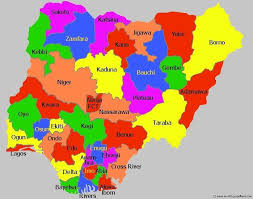
Malagi further dismissed as incorrect a report by Amnesty International claiming that more than 10,000 people were killed in seven Nigerian states—Benue, Edo, Katsina, Kebbi, Plateau, Sokoto, and Zamfara—within two years of President Tinubu’s administration.
“We have seen some of these numbers flying around here and there, including those from Amnesty International, but we still dispute these figures,” he said.
Asked whether the government had its own verified report documenting the extent of violence, Malagi described it as “a work in progress.”
“What’s more important to us is making sure that attacks like this do not happen again,” he said. “We’re calling on our international partners to join hands with us to ensure Nigeria returns to normalcy.”
Joseph John Hayab, Chairman of the Christian Association of Nigeria (CAN) in the northern states and the Federal Capital Territory, said discussions about religious persecution in Nigeria must be approached with “honesty, empathy, and a commitment to truth.”
“While there may be variations in the statistics presented by different organizations, the reality remains that many Christians continue to face harassment, denial of opportunities, and targeted attacks because of their faith,” Hayab said. “These experiences cannot be ignored.”
He added:
“The numbers may differ, but the pain is real. What matters most is not the figures but the human lives lost, the families displaced, and the communities living in fear.”
Archbishop Daniel Okoh, President of CAN, in an October 8 statement affirmed that many Christian communities have suffered “severe attacks, loss of life, and the destruction of places of worship.”
“These realities are painful reminders of the urgent need for government and security agencies to act decisively to protect every citizen,” he stated.
Okoh noted that CAN has established mechanisms to record incidents of religiously motivated killings, engaged international partners, written to the International Criminal Court (ICC) in The Hague, and hosted global Christian organizations to raise awareness.
“Our concern remains that these cries for justice and protection are too often met with delay or denial,” he said.
Pastor and peace advocate Gideon Para-Mallam argued that Nigeria practices “an undeclared policy of denial” regarding the persecution of Christians.
“The Middle Belt has become the epicenter of attacks that disproportionately target Christian farming communities,” he said. “Attackers often come in droves with military-grade weapons to raid villages at night, destroy homes and churches, kill pastors, and force survivors to flee.”
Malagi countered that violence in the Middle Belt is “largely due to competition for resources—especially land—between farmers and herders,” and not religious conflict.
Para-Mallam disagreed:
“If it were a farmer-herder clash, why is it that only the farmers—often Christians—are killed in such high numbers?”
‘Nigeria Will Continue to Fight Extremists’
Malagi reiterated that the government is determined to eliminate extremist violence.
“Nigeria will continue to fight extremists that perpetrate violence toward both Christians and Muslims,” he said. “Authorities are not taking this kindly. A number of measures have been taken.”
He said progress is being made in curbing Boko Haram, ISWAP, and other jihadist groups, adding that the government has enhanced military presence in the Middle Belt, supported peacebuilding efforts, and promoted interfaith dialogue.
While commending the government for some progress, Hayab urged greater efforts to ensure true religious freedom.
“The current administration has shown some improvement compared to the previous government, especially in engaging faith communities and promoting national unity. This progress is commendable,” he said. “However, more needs to be done to guarantee genuine freedom of religion as enshrined in the Nigerian Constitution.”
Regarding the flow of military-grade weapons used by militant herdsmen, Malagi said many come from “outside our borders” and that stopping it will require “the cooperation of our neighbors and the international community.”
“We are taking steps to mitigate that significantly so we can provide security for the lives and property of our people,” he added.
Secular State or Sharia Law?
Malagi maintained that Nigeria is “a very secular state” governed by law, where the constitution guarantees freedom of religion.
“Every member of our society is free to practice his or her religion,” he said.
Asked about the enforcement of Sharia law in 12 northern states, he said it applies only to Muslims and does not violate the constitution.
Hayab disagreed, saying:
“The misuse of Sharia and blasphemy laws in some northern states remains a serious concern. There are still cases where Christian converts are held under such laws, denying them freedom of faith. This amounts to persecution.”
Para-Mallam added that in Sharia states, churches find it “almost impossible” to acquire land or rent worship spaces.
“Blasphemy laws have become tools of religious and political intimidation. Many accused are lynched without fair hearing, and perpetrators rarely face justice,” he said.
Hayab acknowledged that some Muslims have also suffered attacks but emphasized that Christian casualties remain far greater.
“While it is true that some Muslims who reject extremist ideologies have suffered, the Christian community bears a heavier share of these incidents,” he said. “As a nation, we must rise above these divisions and work together to promote justice and mutual respect.”
Malagi concluded that Nigeria’s situation is “very complex,” not defined by systematic persecution.
“Muslims and Christians largely live side-by-side in harmony. We want Christians in the U.S. and across the world to know that Nigeria’s situation is not driven by systematic religious persecution,” he said.
Hayab urged the government to strengthen its security and reconciliation initiatives.
“No Nigerian should be denied freedom of worship or equal opportunity on the basis of religion,” he said. “Nigeria belongs to us all, and we must join hands to build a nation where peace, truth, and fairness define our coexistence.”
Okoh concluded with a call for courage and collective healing.
“Nigeria’s healing will not come from denial or blame but from courage—the courage to face our collective failures, to grieve together, and to rebuild trust within our communities,” he said. “Only then can our nation rise from its wounds and embrace a future of genuine peace.”




-
 Society News5 years ago
Jamaican man beheads wife after finding out their 6 kids are not his
-
 Society News7 years ago
EXCLUSIVE: The Complete Story of Dolapo Awosika, John Fashanu and Prophet Kasali Sex Mess
-
 News6 years ago
Pastor Osagie Ize-Iyamu, His Membership Of Secret Cult, And Other Issues Touching On His Public Credentials Examined by Barr. PATRICK I. BIOSE
-

 News6 years ago
BREAKING: Ajimobi’s daughter-in-law blast Gov. Makinde, says gov can’t surpass ex-Oyo gov
-

 Society News6 years ago
The Rise and Fall of “Jumoke The Bread Seller”
-

 News6 years ago
BREAKING: 2 arrested as NAF begins investigations into Tolulope’s death
-
 Crime6 years ago
Exclusive: Female Aide Fingered In Oko Oloyun’s Murder + Banking Transactions That Nailed Husband
-
 News6 years ago
BREAKING: Police take over Edo House of Assembly as APC, Oshiomhole move to seize control


You must be logged in to post a comment Login