

Featured
Nigeria, Fight Not the World Bank, Fix NBS


Olabode Opeseitan
The Yoruba proverb “ilé la ti n ko èso r’òde” teaches us that the fruit we present to the world is cultivated from within. It’s a timeless truth—whether applied to character, culture, or national credibility. And today, it’s a piercing lens through which to examine Nigeria’s statistical integrity.
Senator Jimoh Ibrahim’s recent rebuke of the World Bank’s poverty report—claiming 139 million Nigerians live in poverty—was impassioned, but misdirected.
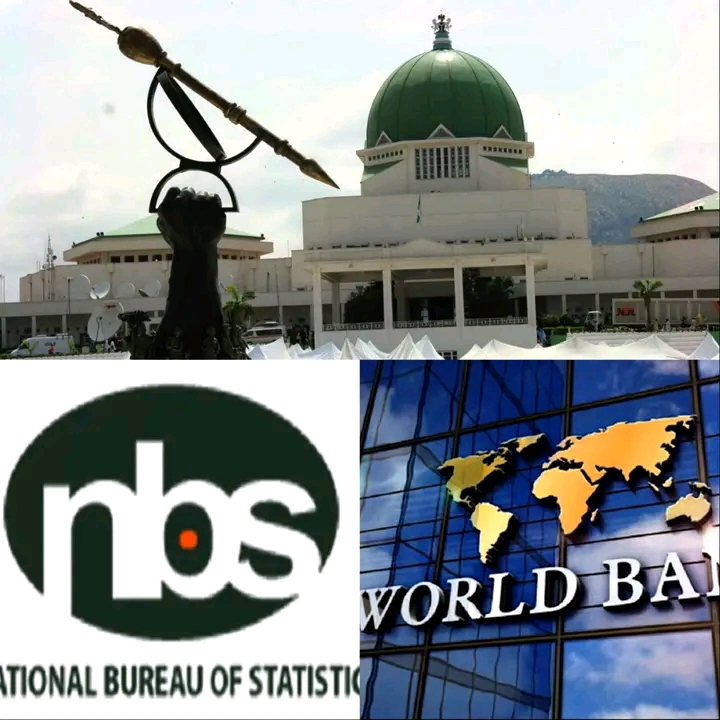
The World Bank doesn’t conjure numbers in isolation. It relies on national statistical agencies, and in Nigeria’s case, that means the Nigerian Bureau of Statistics (NBS). If the data is flawed, the fault lies not in Washington, but in Abuja.
Let’s examine the facts.
THE POVERTY ESTIMATE: A Crisis of Calibration
The World Bank’s October 2025 Nigeria Development Update warns that poverty has surged—from 87 million in 2023 to 139 million in 2025. This figure is derived from NBS household surveys and reflects extreme poverty using the international threshold of $2.15/day.
But here’s the rub: Purchasing Power Parity (PPP) is grossly underutilized. In rural Nigeria, a meal costs about $1, while in rural France, it’s closer to $15. Without adjusting for local cost structures, poverty metrics become misleading and punitive. If the naira is undervalued and local consumption patterns ignored, then the poverty line becomes a foreign imposition—not a domestic reality.
THE KIDNAPPING STATISTIC: A Red Flag in the Data Pipeline
NBS’s Crime Experience and Security Perception Survey (CESPS) claims 2.2 million Nigerians were kidnapped between May 2023 and April 2024. That’s nearly 1 in 100 citizens. It defies logic, and yet it was published without internal challenge.
Where are the Pivot Teams at NBS—the internal auditors who should flag statistical anomalies before they reach global platforms? When data becomes implausible, silence is not neutrality—it’s negligence.
WHEN GROWTH IS INVISIBLE: A Data Crisis in Plain Sight
In the last two years, Nigeria has become a vast construction site. From federal highways to state bridges and local drainage systems, infrastructure projects have surged. Who are the masons, engineers, gravel suppliers, and food vendors powering this boom? Nigerians. Construction is one of the most potent engines of economic reflation—yet NBS poverty data seems blind to its ripple effects.
Agriculture, too, has seen unprecedented investment. The Tinubu administration, in partnership with FAO, launched a $3.14 billion initiative targeting five high-impact value chains—tomato, cassava, maize, dairy, and fisheries—with the potential to lift over 4 million Nigerians out of poverty. Where is this reflected in the poverty metrics?
Nigeria’s GDP has grown, and its trade balance hit a record surplus of ?3.4 trillion in mid-2025. Oil and non-oil exports surged, and reforms stabilized foreign exchange flows. Is NBS suggesting these gains have had zero impact on household welfare?
If growth is happening but poverty is rising, then either:
– The data is flawed,
– The modeling is outdated,
– Or the institution is failing to capture economic reality.
This is not a statistical oversight—it’s a national emergency.
WHEN EMPOWERMENT IS IGNORED: The Poor Who Were Lifted but Not Counted
In the past two years, Nigeria has rolled out targeted interventions that directly address poverty’s root causes—education exclusion and household vulnerability.
• The Nigerian Education Loan Fund (NELFUND), as of August 2025, has disbursed over ?86.3 billion to approximately 450,000 students. This includes ?47.6 billion for tuition and ?38.7 billion for upkeep allowances. These are not just numbers—they represent futures rescued from dropout, debt, and despair.
• The Conditional Cash Transfer (CCT) program, backed by World Bank and recovered assets, has disbursed ?330 billion to over 8.5 million poor households. Payments were made in tranches of ?25,000, with some households receiving multiple installments. Beneficiaries have used the funds to start micro-enterprises, stabilize food access, and reduce child malnutrition.
If NBS poverty estimates fail to reflect these interventions, then the data is not just incomplete—it’s unjust. It erases the very people these programs were designed to uplift.
THE INSTITUTIONAL GAPS: What’s Broken at NBS?
• Funding Deficit: NBS operates with constrained budgets, limiting its ability to conduct frequent, granular surveys.
• Technology Lag: Many data collection tools are outdated. Broadband penetration in Nigeria dropped from 47.3% in 2022 to 43.7% in 2023—a sign of digital regression (It’s instructive that the Federal Government has now decided to increase broadband penetration across Nigeria).
• Talent Drain: Skilled statisticians are leaving for better opportunities. Retention is low, and training pipelines are thin.
• Data Integrity Risks: Poor infrastructure, limited field verification, and political pressure can distort datasets before they’re even analyzed.
WHAT THE SENATE AND EXECUTIVE MUST DO—A Reform Blueprint
1. Audit the NBS: Commission an independent review of its funding, staffing, and technology systems.
2. Create a Data Quality Council: A cross-sectoral body to vet high-impact statistics before publication.
3. Fund a National PPP Index: Build a localized cost-of-living model to recalibrate poverty thresholds.
4. Invest in Digital Infrastructure: Equip NBS with mobile data tools, cloud analytics, and secure transmission protocols.
5. Establish Regional Data Hubs: Decentralize data collection to improve granularity and reduce urban bias.
6. Protect Statistical Independence: Shield NBS from political interference through legislative safeguards.
WHY THIS MATTERS
Data is destiny. Every policy, budget, and international negotiation hinges on the credibility of our numbers. If the dataset is wrong, the diagnosis is wrong—and so is the prescription. Nigeria cannot afford statistical malpractice.
Senator Ibrahim, as a ranking member of the Senate, has the platform to lead this reform. His frustration is valid—but it must be redirected toward systemic repair, not rhetorical deflection.
Let us not be the nation that shouts at the mirror when the decay lies beneath the skin. Let us fix the root, so the fruit we present to the world reflects our true potential.
#NigeriaEconomy
#FixNBS
#DataForDevelopment
#StatisticalIntegrity
#NigeriaPolicy
#WorldBank
#Nigeria
Asiwaju Bola Ahmed Tinubu
Godswill Obot Akpabio
The Senate President – Nigeria
Tajudeen Abass
Bayo Onanuga
Federal Ministry of Information and National Orientation, Nigeria
National Orientation Agency, Nigeria.
Jimoh Ibrahim
Olabode Opeseitan
Editorial Architect | Legacy Steward | Strategic Communicator




-

 Society News5 years ago
Jamaican man beheads wife after finding out their 6 kids are not his
-
 Society News7 years ago
EXCLUSIVE: The Complete Story of Dolapo Awosika, John Fashanu and Prophet Kasali Sex Mess
-
 News6 years ago
Pastor Osagie Ize-Iyamu, His Membership Of Secret Cult, And Other Issues Touching On His Public Credentials Examined by Barr. PATRICK I. BIOSE
-

 News6 years ago
BREAKING: Ajimobi’s daughter-in-law blast Gov. Makinde, says gov can’t surpass ex-Oyo gov
-

 Society News6 years ago
The Rise and Fall of “Jumoke The Bread Seller”
-

 News6 years ago
BREAKING: 2 arrested as NAF begins investigations into Tolulope’s death
-
 Crime6 years ago
Exclusive: Female Aide Fingered In Oko Oloyun’s Murder + Banking Transactions That Nailed Husband
-

 News6 years ago
BREAKING: Police take over Edo House of Assembly as APC, Oshiomhole move to seize control


You must be logged in to post a comment Login