

Crime
N1.35bn Corruption Bombshell: Supreme Court Revives EFCC Case, Orders Sule Lamido, Sons To Open Defence


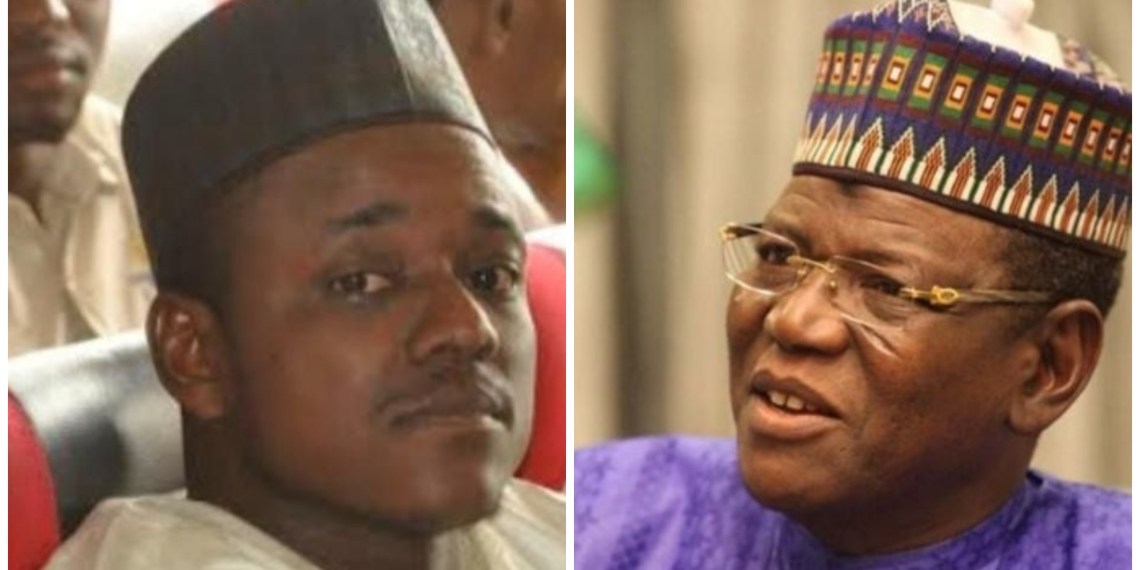
In a dramatic legal turnaround, the Supreme Court on Friday, January 16, 2026, ordered former Jigawa State Governor, Alhaji Sule Lamido, alongside his sons Mustapha and Aminu, to resume trial and enter their defence over an alleged N1.35 billion money-laundering scandal.
The apex court, in two unanimous judgments delivered by a five-member panel, allowed appeals filed by the Economic and Financial Crimes Commission (EFCC), effectively overturning earlier decisions that had halted the prosecution.
The ruling set aside the July 25, 2023 judgment of the Court of Appeal, Abuja, which had upheld a no-case submission by Lamido and others, struck out the 43-count amended charge, and held that the Federal High Court lacked jurisdiction to hear the case.
With Friday’s decision, the Supreme Court cleared the way for the Federal High Court, Abuja, to continue proceedings, directing the defendants to open their defence on the charges bordering on abuse of office, gratification, and laundering of public funds.
According to the EFCC, Lamido allegedly used his position as governor to obtain gratification from companies awarded Jigawa State Government contracts, before allegedly converting and concealing the proceeds through accounts linked to Bamaina Holdings/Bamaina Company Nigeria Limited.
Among the charges is an allegation that in December 2008, Lamido converted N14.85 million, paid by Dantata & Sawoe Construction Company Nigeria Limited, through a Unity Bank account, knowing the funds to be proceeds of an unlawful act. Another count accuses him of converting N14.99 million in April 2009 from the same source under similar circumstances.
In a further count, Lamido, his two sons and Bamaina Company Nigeria Limited are accused of retaining N48 million in February 2012, allegedly paid by Interior Woodwork Limited, with knowledge that the funds were proceeds of gratification linked to a Jigawa State Government contract.
All the offences are said to be contrary to provisions of the Money Laundering (Prohibition) Acts of 2004 and 2011 (as amended).
The ruling marks a major victory for the EFCC and reopens one of Nigeria’s most high-profile corruption trials, ending years of legal roadblocks and sending a strong signal that no-case submissions will not shield politically exposed persons from answering serious allegations.
















-

 Society News5 years ago
Jamaican man beheads wife after finding out their 6 kids are not his
-
 Society News7 years ago
EXCLUSIVE: The Complete Story of Dolapo Awosika, John Fashanu and Prophet Kasali Sex Mess
-

 News6 years ago
Pastor Osagie Ize-Iyamu, His Membership Of Secret Cult, And Other Issues Touching On His Public Credentials Examined by Barr. PATRICK I. BIOSE
-

 News6 years ago
BREAKING: Ajimobi’s daughter-in-law blast Gov. Makinde, says gov can’t surpass ex-Oyo gov
-

 Society News6 years ago
The Rise and Fall of “Jumoke The Bread Seller”
-

 News6 years ago
BREAKING: 2 arrested as NAF begins investigations into Tolulope’s death
-

 Crime6 years ago
Exclusive: Female Aide Fingered In Oko Oloyun’s Murder + Banking Transactions That Nailed Husband
-

 News6 years ago
BREAKING: Police take over Edo House of Assembly as APC, Oshiomhole move to seize control

You must be logged in to post a comment Login