
Featured
Lagos, The City That Benched Its X-Factor


Olabode Opeseitan
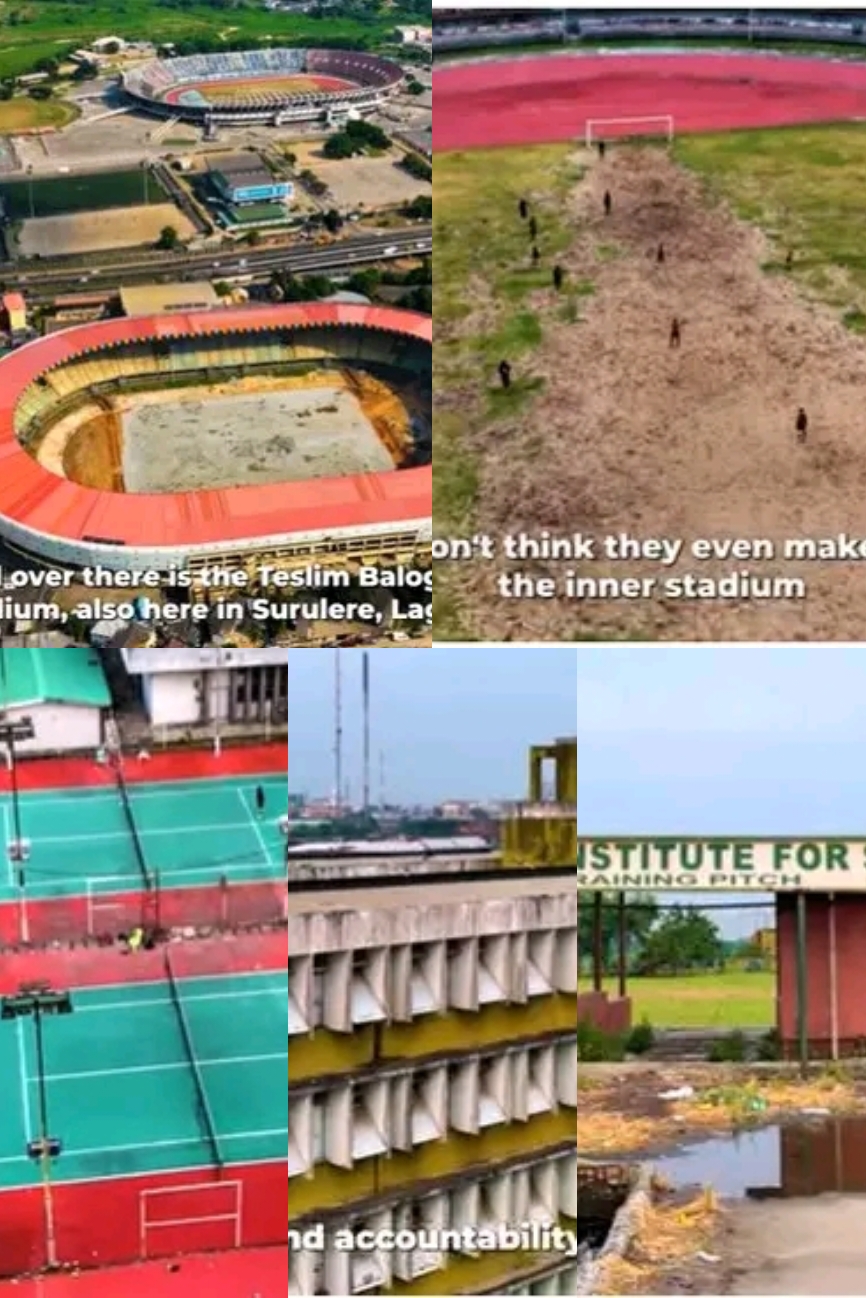
Lagos, a city that thumps with more than 20 million heartbeats, now stands in the absurd position of hosting two great stadia in Surulere, yet having neither in truly functional shape by global benchmarks. It is as if a megacity that once sold itself as Africa’s capital of hustle has quietly agreed to sit this one out.
The Beauty and the Blind Spots
Edward Wonder’s recent video, captioned “How Can Lagos Have Two Stadiums but None Truly Functional?,” captures this contradiction with unnerving clarity: the concrete majesty, the peeling paint, the echo of unrealized applause. It is beautiful because it forces Lagosians to see again what they have trained themselves to ignore, and terrible because it stops where a more serious journalism should begin. A city cannot repair what it refuses to understand, and understanding starts with talking to all the people who hold the keys.
A travel YouTuber with Edward’s passion has already outgrown the touch-and-go mode of “look, lament, leave.” He now has the audience and moral capital to become an institutional voice, the kind that stitches together citizen anger, government explanations, and expert proposals into a single narrative the city can act on. That means not just filming gates and broken seats, but demanding interviews with Lagos State officials like the Governor Babajide Sanwo-Olu and Lagos State Sports Commission Director General Lekan Fatodu, as well as the National Sports Commission and the National Institute for Sports, and putting their answers, or evasions, on record.
What Lagos Already Does, and Still Leaves Undone
To be fair, Lagos is not a sporting desert. The Mobolaji Johnson Arena, formerly Onikan Stadium, has been rebuilt and renamed, and now serves as the home ground for a dense ecosystem of Lagos clubs. Across the city, Agege Stadium, and a network of mini-stadia in places like Ifako-Ijaiye, Igbogbo, Gbagada, Ikeja, Badagry, Ikorodu, Lagos Island and Epe testify to sustained investment by successive administrations, from Asiwaju Bola Ahmed Tinubu through Babatunde Raji Fashola and Akinwunmi Ambode to Sanwo-Olu.
The problem is no longer whether Lagos invests in sports; it is whether the scale and coherence of that investment match the city’s ambitions as an emerging global cultural and creative hub. Mobolaji Johnson Arena is reportedly carrying the load of several registered clubs, while Agege and Teslim Balogun have lurched through prolonged closures and staggered renovations, leaving facilities overstretched and under-optimised. A city that is increasingly marketed as livable, art-forward and globally connected must take its sports infrastructure up a notch, from fulfilling-all-righteousness expenditure to a deliberate, compounding strategy.
Across the world, sports are not leisure; they are economic engines. In the United Kingdom, the sports sector contributed £99.6 billion in direct economic output in 2021 (equivalent to 2.5 percent of total UK output), with £53.6 billion in direct Gross Value Added (2.6 percent of national GVA) and support for 1.25 million jobs (3.9 percent of total employment). Nigeria’s National Bureau of Statistics does not yet publish a dedicated Sports Satellite Account, an omission that speaks volumes, but the global evidence is overwhelming: sports are a GDP multiplier. Lagos, with its restless youth population and cultural magnetism, should be Africa’s sports capital. Instead, it is a cautionary tale.
Cities That Refused Decay
Great cities have faced similar moments of infrastructural shame and clawed their way back. Barcelona entered the 1980s as a tired industrial port, ringed by derelict zones and cut off from its own waterfront. The decision to bid for the 1992 Olympics did not just bring a sporting event; it became a pretext for a generational urban surgery, opening the city to the sea, laying highways and transit, repurposing abandoned rail yards into modern sports complexes, and nesting the new venues inside a long-term regeneration plan. Three decades later, most permanent venues built for the Games are still in use, and the “Barcelona model” of sports-led regeneration is studied as a template worldwide.
New York City, in the 1970s fiscal crisis, allowed its parks, stadiums and public spaces to collapse into disrepair amid near-bankruptcy and neglect. It took radical public-private partnerships, like the Central Park Conservancy, formed in 1980 and now raising 85 percent of the park’s $42.5 million annual budget, to resurrect Central Park and facilities like Yankee Stadium, charting a new course for urban park management nationwide.
London did something similar, though in a more bureaucratic British key. The city took a largely post-industrial stretch of East London, poured roughly £9 billion into an Olympic Park, and then baked in a second act: housing, parkland, transport links and a mixed-use district that has since attracted billions more in investment and supported tens of thousands of jobs. The sports venues were never treated as isolated monuments; they were anchors in a new economic geography.
Lagos is not Barcelona, New York or London. But Lagos has something those cities lacked at the time: a vast, hungry youth population, an established football culture, and a global diaspora already predisposed to care. The tragedy is not that the National Stadium in Surulere is decaying; it is that its decay is not being used as a trigger for a new city-making project.
From Complaint to Blueprint
The answers that Edward’s video does not yet give are not beyond reach. The Lagos State Government can explain why Teslim Balogun Stadium is under rehabilitation, why works have been dragged, and what specific technical issues, such as the upgrade of the track and pitch to meet continental standards, are holding things up. The National Institute for Sports, under a director-general like former Edo State deputy governor Rt. Hon. Comrade Philip Shaibu, should state what has survived of his initial vision and what timelines remain. The National Sports Commission headed by the calm and experienced Shehu Dikko should be able to articulate where the National Stadium, Surulere sits in its plan to grow sports to roughly 3 percent of GDP in the coming years, a target its leadership has publicly floated.
To its credit, the current administration of President Bola Ahmed Tinubu has begun to chip away at the old intergovernmental inertia that kept federal assets in perpetual limbo. The formal handover of the Ahmadu Bello Stadium to the Kaduna State Government and the subsequent full-scale reconstruction drive led by The Governor of Kaduna State show what can happen when responsibility is properly devolved and funded. That is the same logic that should govern the future of Surulere and other moribund facilities: clarity of ownership, clarity of standards, clarity of timelines.
But beyond pressing for answers, Lagos, and by extension Nigeria, needs a new architecture of responsibility. A few concrete, ambitious and implementable moves would change the conversation from lament to leverage:
1. Create a Lagos Sports Assets Corporation
A legally ring-fenced Lagos Sports Assets Corporation should hold, finance and manage all state sports facilities, with a transparent board that includes private operators, athletes, club representatives and civil society. Its mandate: keep stadia financially solvent through a mix of sports events, concerts, conferences, naming rights, retail leases and media production, and publish audited accounts annually. Ten years from now, such a corporation could stand alongside agencies like the Lagos State Signage and Advertisement Agency or the Lagos State Internal Revenue Service as a mature, technocratic institution, one that not only keeps facilities alive but finances new ones through bond issuances, public–private partnerships and a track record that global investors can price.
2. First State Ownership, Then Concession
Lagos State Government should pursue direct takeover of the National Stadium in Surulere, following the precedent set by the successful transfer of Ahmadu Bello Stadium from the Federal Government to Kaduna State Government. If federal handover proves unfeasible or state finances too constrained, then concession the asset through an open, competitive process to a consortium with clear performance metrics: minimum match days per year, community access hours, maintenance standards and revenue-sharing formulas with both governments, much as New York revived public facilities through private rehabilitation swaps. The Kaduna model shows that localised ownership can unlock FIFA- and CAF-compliant reconstruction. Concession remains a strong Plan B to ensure the asset generates returns without burdening public budgets.
3. Launch a Youth Sports Employment Corps
Train 50,000 young Lagosians as exceptional coaches, referees, facility managers, physiotherapists and sports-tech workers over the next five years. Sports are labour-intensive; youth unemployment is epidemic. The math writes itself: every cohort deployed becomes a stakeholder in the system’s success.
4. A “Barcelona Clause” in Urban Planning
No major transport or regeneration project in Lagos should be approved without an attached sports and public recreation component, however modest. The lesson from Barcelona, New York and London is blunt: sports facilities multiply their value when knitted into wider urban improvements such as roads, rail, housing, waterfronts, not when they stand alone.
5. Mandate a Lagos Sports Satellite Account
Partner with the National Bureau of Statistics to create and publish a dedicated Lagos Sports Satellite Account, quantifying jobs, GVA, wages and trade, modelled after the UK’s rigorous framework. What gets measured gets funded; what gets funded becomes a flagship.
The Call Lagos Cannot Dodge
The Tinubu administration has signalled ambition in agriculture, infrastructure, aviation, digital technology and financial restructuring, and its willingness to devolve assets like Ahmadu Bello Stadium suggests that sports is now at least entering the conversation. Subnational leaders, from Sanwo-Olu in Lagos to Seyi Makinde in Oyo, Prince Dr. Dapo Abiodun – MFR in Ogun, Senator Bala Abdulkadir Mohammed in Bauchi, Pastor Umo Eno in Akwa Ibom, Rt Hon Sheriff Oborevwori in Delta, Senator Uba Sani in Kaduna and others are sketching parts of a different future, even if unevenly, with new facilities, renovations and youth programmes.
Lagos remains, in many ways, the benchmark: a continuity of governance excellence from Tinubu’s foundational revenue and transport innovations, to the security trust fund that empowers agencies to deliver, through Fashola’s execution, Ambode’s bold (if frustrated) stadium ambitions, to Sanwo-Olu’s delivery on Blue and Red Line rails and hundreds of roads. Even federal projects like the Lagos-Calabar Coastal Highway amplify what layered governance can achieve when it works. A city that has taught others how to modernise their tax systems, reorganise their traffic and market their culture cannot be content with half-finished tracks and darkened stands.
Edward Wonder’s video asks how a city of more than 20 million can boast two great stadia in Surulere and have none that truly works. The deeper question is harsher: how long can a city bench its own X-Factor and still claim to be in the game?
Olabode Opeseitan
Editorial Architect | Legacy Steward | Strategic Communicator
#sports
#sportsfacilities
#lagos
#nigeria
#RenewedHope
Femi Gbajabiamila Hon Femi Gbajabiamila
Tope Fasua
@highlight





-

 Society News5 years ago
Jamaican man beheads wife after finding out their 6 kids are not his
-
 Society News7 years ago
EXCLUSIVE: The Complete Story of Dolapo Awosika, John Fashanu and Prophet Kasali Sex Mess
-
 News6 years ago
Pastor Osagie Ize-Iyamu, His Membership Of Secret Cult, And Other Issues Touching On His Public Credentials Examined by Barr. PATRICK I. BIOSE
-

 News6 years ago
BREAKING: Ajimobi’s daughter-in-law blast Gov. Makinde, says gov can’t surpass ex-Oyo gov
-

 Society News6 years ago
The Rise and Fall of “Jumoke The Bread Seller”
-
 News6 years ago
BREAKING: 2 arrested as NAF begins investigations into Tolulope’s death
-
 Crime6 years ago
Exclusive: Female Aide Fingered In Oko Oloyun’s Murder + Banking Transactions That Nailed Husband
-
 News6 years ago
BREAKING: Police take over Edo House of Assembly as APC, Oshiomhole move to seize control


You must be logged in to post a comment Login