

Abuja
IMPI Slams Senator Ndume Over Misleading Debt Claims, Defends Tinubu’s Reform Agenda


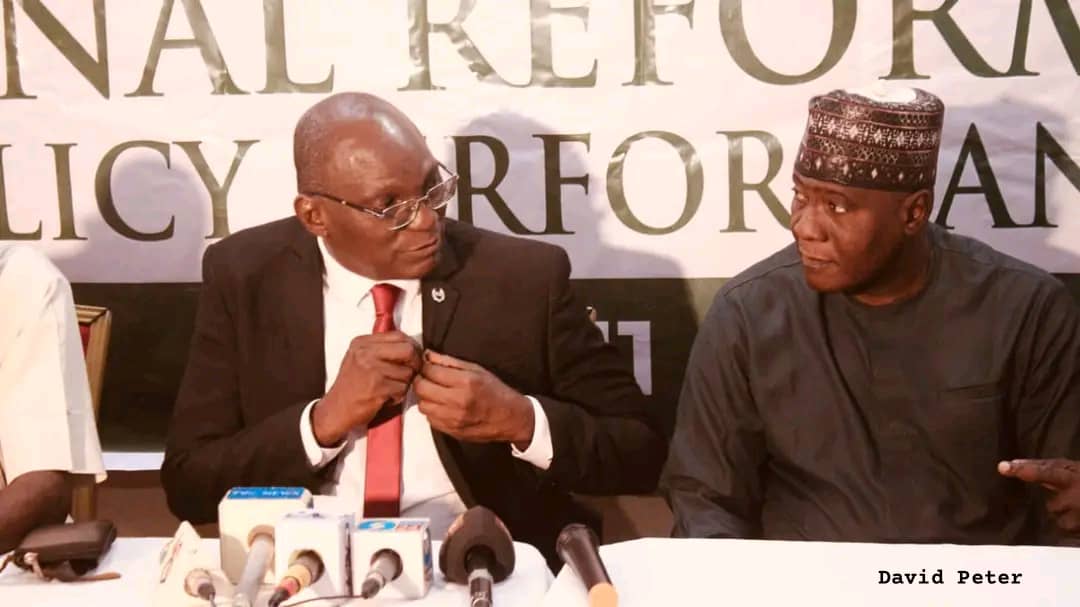
The Independent Media and Policy Initiative (IMPI) has strongly condemned recent remarks by Senator Mohammed Ali Ndume over Nigeria’s debt profile, accusing the lawmaker of deliberately distorting facts to undermine President Bola Tinubu’s reform-driven administration.
In a detailed statement signed by its Chairman, Dr. Omoniyi Akinsiju, IMPI faulted Senator Ndume’s assertions made during a recent television appearance, where he questioned the transparency and necessity of the country’s recent borrowings, which he put at $9.45 billion (about N13 trillion) since June 2023.
Describing the claims as misleading and politically motivated, IMPI noted that the Senator failed to provide context or acknowledge significant progress in Nigeria’s fiscal management. “While the public debt in local currency terms has risen, in dollar terms it has decreased dramatically—from $108.23 billion at the end of 2023 to $94.23 billion by December 2024—representing a $14 billion drop,” the statement read.
IMPI emphasised that such a reduction marks Nigeria’s most significant dollar debt contraction since 2006 and should be commended rather than criticized. It challenged Ndume’s suggestion that the loans were used for “non-tangible” projects, arguing that modern development includes investments in human capital such as health, education, social protections, and agricultural support—areas critical for long-term national prosperity.
“Senator Ndume’s view that only physical infrastructure matters is outdated and ignores the realities of inclusive growth,” the group stated. It further clarified that the loans in question are largely concessionary, sourced from multilateral institutions like the World Bank, with favorable conditions such as low interest rates, long repayment terms (up to 40 years), and moratoriums.
IMPI explained that multilateral institutions prioritize investments in human development, which commercial banks often avoid due to their lack of physical collateral or immediate profitability. “The World Bank’s mandate is to help countries invest in their people. These are not irresponsible debts, but strategic funding for national growth,” IMPI argued.
Data presented by the group showed that World Bank loans accounted for nearly 80% of Nigeria’s multilateral debt in 2024, increasing only modestly from $21.15 billion in 2023 to $22.32 billion—a 5.5% rise. At the same time, Nigeria’s debt to the IMF plummeted by 67.6%, from $2.47 billion to $800.23 million.
Contrary to Senator Ndume’s claim of $9.5 billion in disbursements, IMPI clarified that actual World Bank disbursements between 2023 and 2024 amounted to $2.36 billion. “Six projects worth $4.25 billion were approved, but that is far from the figure the Senator cited,” the group said.
Additionally, IMPI rejected Ndume’s assertion that the loans bypassed parliamentary scrutiny, noting that all World Bank credits must pass through internal approval mechanisms and be ratified by Nigeria’s National Assembly before any funds are released.
The think tank described Senator Ndume’s comments as “deeply troubling and unworthy of a ranking legislator,” warning that misrepresentation of national issues for political gain undermines public trust and informed debate.
“Rather than disparage the government’s debt strategy, Senator Ndume and other public officials should acknowledge the administration’s careful balancing of new credit and debt reduction,” Dr. Akinsiju said.
He concluded by urging public figures to uphold transparency and accuracy in national discourse, especially on sensitive matters such as public debt. “Nigerians deserve the truth, not political spin,” he said.




-

 Society News5 years ago
Jamaican man beheads wife after finding out their 6 kids are not his
-
 Society News7 years ago
EXCLUSIVE: The Complete Story of Dolapo Awosika, John Fashanu and Prophet Kasali Sex Mess
-
 News6 years ago
Pastor Osagie Ize-Iyamu, His Membership Of Secret Cult, And Other Issues Touching On His Public Credentials Examined by Barr. PATRICK I. BIOSE
-

 News6 years ago
BREAKING: Ajimobi’s daughter-in-law blast Gov. Makinde, says gov can’t surpass ex-Oyo gov
-

 Society News6 years ago
The Rise and Fall of “Jumoke The Bread Seller”
-

 News6 years ago
BREAKING: 2 arrested as NAF begins investigations into Tolulope’s death
-
 Crime6 years ago
Exclusive: Female Aide Fingered In Oko Oloyun’s Murder + Banking Transactions That Nailed Husband
-

 News6 years ago
BREAKING: Police take over Edo House of Assembly as APC, Oshiomhole move to seize control


You must be logged in to post a comment Login