

Featured
How Nigeria Became World’s Poster Nation For Transformative Reforms


Olabode Opeseitan
From painful adjustments and political firestorms to World Bank praise and a new global benchmark for economic courage.
Something rare happened on an ordinary Tuesday in Abuja this week. In the cool formality of the Presidential Villa, far from the street-level jokes about “suffering and smiling,” a quiet verdict was delivered on two bruising years of economic upheaval.
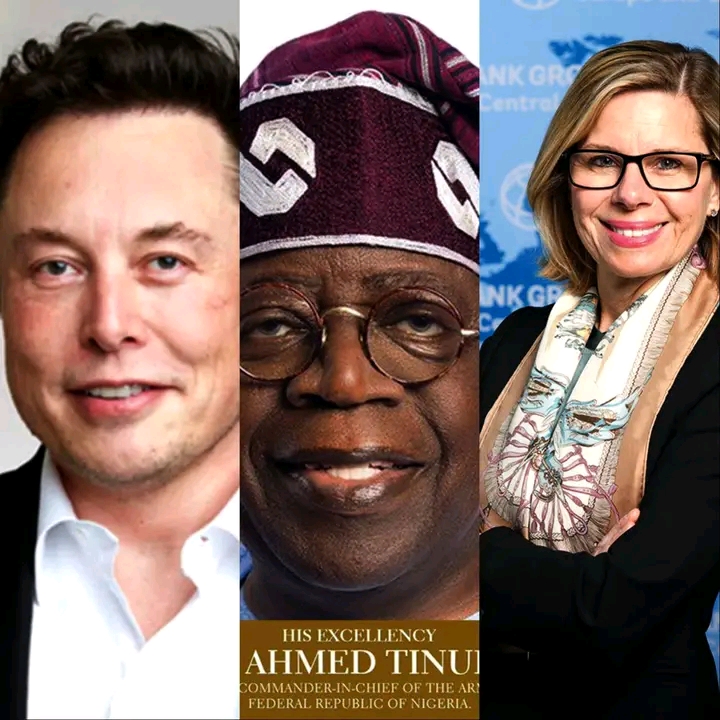
A senior World Bank team, led by its Managing Director of Operations, sat across from President Bola Ahmed Tinubu and did something Nigeria is not used to seeing from the global establishment: they held it up as an example.
Nigeria, Anna Bjerde said, had become a reference point for credible reform leadership, the kind of steady, politically costly decision-making that technocrats admire and politicians, as a rule, avoid. It was the sort of sentence that doesn’t trend but does endure.
For a country long caricatured as a warning, it sounded almost subversive to hear it described as a model.
This new framing did not fall from the sky. It arrived after a period in which Tinubu’s government became the punching bag of a restless political class. Rotimi Amaechi accused the administration of having “buried the economy.” Nasir El-Rufai, once an ally, declared it the “most corrupt, worst” in Nigerian history.
Atiku Abubakar made a kind of cottage industry out of daily denunciations, branding Tinubu incompetent and his policies cruel. Peter Obi, for his part, toured studios and stages insisting that the economy was mismanaged and directionless, a cautionary tale wrapped in a tragedy.
Yet, as the rhetoric intensified, the macro picture began to shift. The early shock of subsidy removal and exchange-rate unification gave way to a slow, stubborn recalibration. Inflation, which had spiked, started edging down. Food prices, once the symbol of despair, began to ease. Investor conversations that had gone cold warmed back to life. Economists who had initially warned of chaos started to recalibrate their own language: words like “genuine rebound,” “audacious reforms,” “stabilisation,” and “renewed confidence” entered the commentary.
And then, somewhere between the pain and the payoff, a curious thing happened: the richest man in the world joined the chat.
Elon Musk, who thinks in planetary scales and balance sheets, looked at Nigeria’s trajectory and did not see a basket case. He saw momentum. In public, he spoke of Nigeria as one of the top emerging economies to watch: a place where, if the reforms held and governance stayed broadly rational, the upside could be extraordinary.
In a world where capital is both skittish and ruthless, that kind of endorsement does not function as flattery; it functions as a signal. Investors read it, algorithms record it, and narratives shift.
So you had, on one side, a familiar chorus of domestic politicians locked into a story of unending failure, insisting nothing good could possibly come from the current order.
On the other side, you had global institutions, market analysts, and now a billionaire technologist effectively saying: look again. The same data that fueled domestic outrage was, abroad, being interpreted as proof that Nigeria had finally chosen the hard road, the one that hurts before it heals.
This is the paradox at the heart of reform. In 2023 and 2024, the average Nigerian did not experience “structural adjustment” as a beautiful phrase in a policy paper; they experienced it as a more expensive bag of rice, a thinner wallet, a harsher commute.
Tinubu’s repeated plea, endure the pain now, reap the benefits later, sounded, to many, like the oldest scam in politics. Every past government had promised delayed gratification; most had only delivered the delay.
But by 2025, the first visible cracks appeared in the wall of despair. Prices stopped spiralling. The currency steadied. Some of the same experts who had warned of disaster began to acknowledge that, while messy and imperfect, the reforms were working. The World Bank visit did not inaugurate that recognition; it formalised it. It took what had been a contested domestic argument and stamped it with multilateral institutional credibility.
Meanwhile, the opposition narrative did not evolve; it calcified. Peter Obi kept hammering the same lines about mismanagement, even as the indicators he cited started to move in the other direction. In global markets, this created a kind of cognitive dissonance: a political class insisting on catastrophe, and an economic reality, however fragile, trending toward recovery.
Nigerians scrolling their phones encountered a strange split-screen: foreign headlines treating their country as a turnaround story, and local voices insisting they were living in ruins.
The truth, as usual, lives in the tension. Tinubu’s Nigeria is not a miracle; it is a work in progress. The reforms have winners and losers. The hardship was real and, for many, remains ongoing.
Corruption has not evaporated. Institutions still leak, though there is now greater intentionality in the efforts of anti-corruption agencies to cure the malady. But there is something undeniably different about a country that once appeared in conference rooms as a cautionary tale and is now cited as a case study.
What makes Nigeria, in this moment, a “poster nation” for transformative reforms is not perfection. It is the willingness to hold the line when the politics turned brutal. It is a president who chose to spend his political capital early, instead of hoarding it for re-election. It is the convergence, however uneasy, of technocrats at home, financiers abroad, and even an unpredictable billionaire in Boca Chica, Texas, all pointing, however cautiously, in the same direction.
Against this backdrop, the old style of politics, the performative outrage, the endless press releases, the weaponisation of genuine suffering for electoral gain, looks increasingly deceitful. It is easier to tweet collapse than to manage transition. It is easier to belittle hard choices than to propose better ones.
In the end, this is the story the title promises: a country that staggered through pain, weathered a storm of denunciations, and emerged as something unusual in the global imagination, a proof-of-concept that even in a noisy, polarised democracy, it is still possible to choose the difficult path, stay on it, and begin to change the numbers that matter.
The World Bank’s praise gives that story structure. Elon Musk’s interest gives it spectacle. But the real authors are the millions of Nigerians who absorbed the shock, stayed on their feet, and, despite every reason to give up, allowed their country to become something it has not been in a long time: a global example of what success looks like.
#elonmusk
#Nigeria
#RenewedHope
#Tinubu




-

 Society News5 years ago
Jamaican man beheads wife after finding out their 6 kids are not his
-
 Society News7 years ago
EXCLUSIVE: The Complete Story of Dolapo Awosika, John Fashanu and Prophet Kasali Sex Mess
-
 News6 years ago
Pastor Osagie Ize-Iyamu, His Membership Of Secret Cult, And Other Issues Touching On His Public Credentials Examined by Barr. PATRICK I. BIOSE
-

 News6 years ago
BREAKING: Ajimobi’s daughter-in-law blast Gov. Makinde, says gov can’t surpass ex-Oyo gov
-

 Society News6 years ago
The Rise and Fall of “Jumoke The Bread Seller”
-

 News6 years ago
BREAKING: 2 arrested as NAF begins investigations into Tolulope’s death
-
 Crime6 years ago
Exclusive: Female Aide Fingered In Oko Oloyun’s Murder + Banking Transactions That Nailed Husband
-
 News6 years ago
BREAKING: Police take over Edo House of Assembly as APC, Oshiomhole move to seize control


You must be logged in to post a comment Login