

News
Election Day Workers Are Silent Casualties Of Nigeria’s Polls – Yilwatda


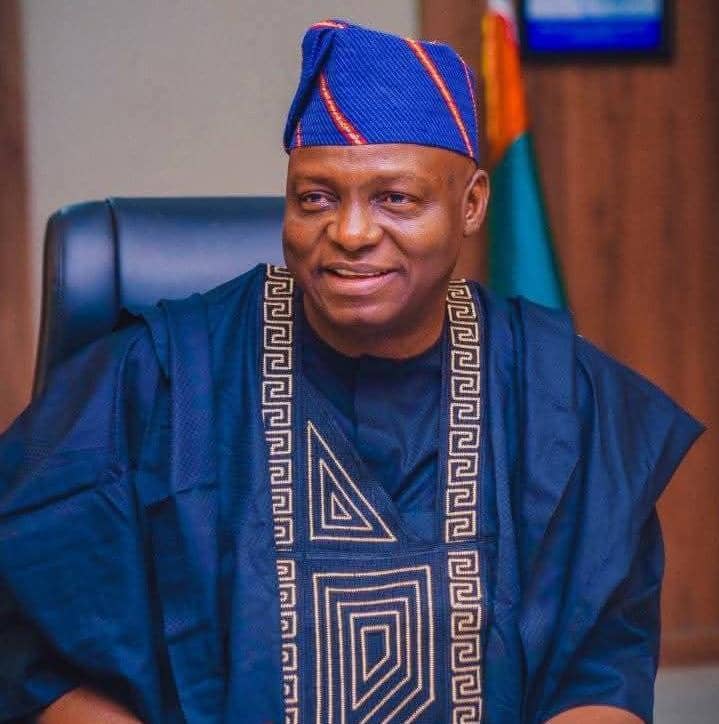
The National Chairman of the All Progressives Congress (APC), Professor Nentawe Yilwatda, has raised a fundamental concern about Nigeria’s electoral process, pointing to what he described as a major but often ignored contributor to low voter turnout in elections.
Speaking at the first quarterly meeting of registered party leaders and the Independent National Electoral Commission (INEC) at the Ccommissions’ National Headquarters in Abuja, Professor Yilwatda noted that thousands of Nigerians who are legally eligible to vote are effectively disenfranchised on election day because of the very roles they play in safeguarding the process.
He listed INEC ad-hoc staff, security personnel, civil society observers, medical doctors, journalists and other essential support staff who are deployed for election duties but are unable to cast their votes.
According to him, these categories of citizens are later counted among those blamed for voter apathy, even though their absence from the polling booth is a direct consequence of national service.
Professor Yilwatda stressed that this contradiction calls for urgent policy reflection, particularly on the long-debated issue of early voting.
Responding to the issue, the Chairman of the Independent National Electoral Commission (INEC), Professor Joash Ojo Amupitan, SAN, explained that while the idea of early voting had been considered, it raised serious operational and cultural concerns.
He noted that by the time he assumed office, work on the Electoral Bill had largely been completed, but early voting stood out as one reform that could potentially accommodate election-day workers.
However, the INEC Chairman cautioned against a system where votes are cast early and “warehoused” for counting after the general election. Such an arrangement, he warned, could expose the process to abuse, manipulation and loss of public trust, with fears that “huge votes could suddenly appear from somewhere.”
At the heart of the matter, he said, is Nigeria’s electoral culture. Nigerians, he observed, are deeply invested in real-time voting and counting, wanting to see results as they emerge. Until the country builds a culture and system that enjoys absolute public confidence and is seen as incorruptible, adopting early voting may remain difficult.
The INEC Chairman also highlighted the heavy financial implications of conducting elections in a single day nationwide. He explained that doing so would require the Commission to almost double its electoral materials, since the current staggered process allows for the reuse of some equipment.
A one-day election, he said, would significantly increase the cost of elections and place enormous pressure on resources.
Professor Yilwatda concluded by emphasizing that Nigeria must confront these realities honestly, balancing inclusivity, credibility, cost and culture, if the nation is serious about strengthening its democracy and ensuring that no citizen is excluded from the ballot by virtue of service to the country.




-

 Society News5 years ago
Jamaican man beheads wife after finding out their 6 kids are not his
-
 Society News7 years ago
EXCLUSIVE: The Complete Story of Dolapo Awosika, John Fashanu and Prophet Kasali Sex Mess
-
 News6 years ago
Pastor Osagie Ize-Iyamu, His Membership Of Secret Cult, And Other Issues Touching On His Public Credentials Examined by Barr. PATRICK I. BIOSE
-

 News6 years ago
BREAKING: Ajimobi’s daughter-in-law blast Gov. Makinde, says gov can’t surpass ex-Oyo gov
-

 Society News6 years ago
The Rise and Fall of “Jumoke The Bread Seller”
-

 News6 years ago
BREAKING: 2 arrested as NAF begins investigations into Tolulope’s death
-
 Crime6 years ago
Exclusive: Female Aide Fingered In Oko Oloyun’s Murder + Banking Transactions That Nailed Husband
-
 News6 years ago
BREAKING: Police take over Edo House of Assembly as APC, Oshiomhole move to seize control


You must be logged in to post a comment Login