

News
EFCC Chairman Olukoyede Urges Media Vigilance in Anti-Corruption Fight • Justice Bankole-Oki Calls for Urgent Judicial Reform


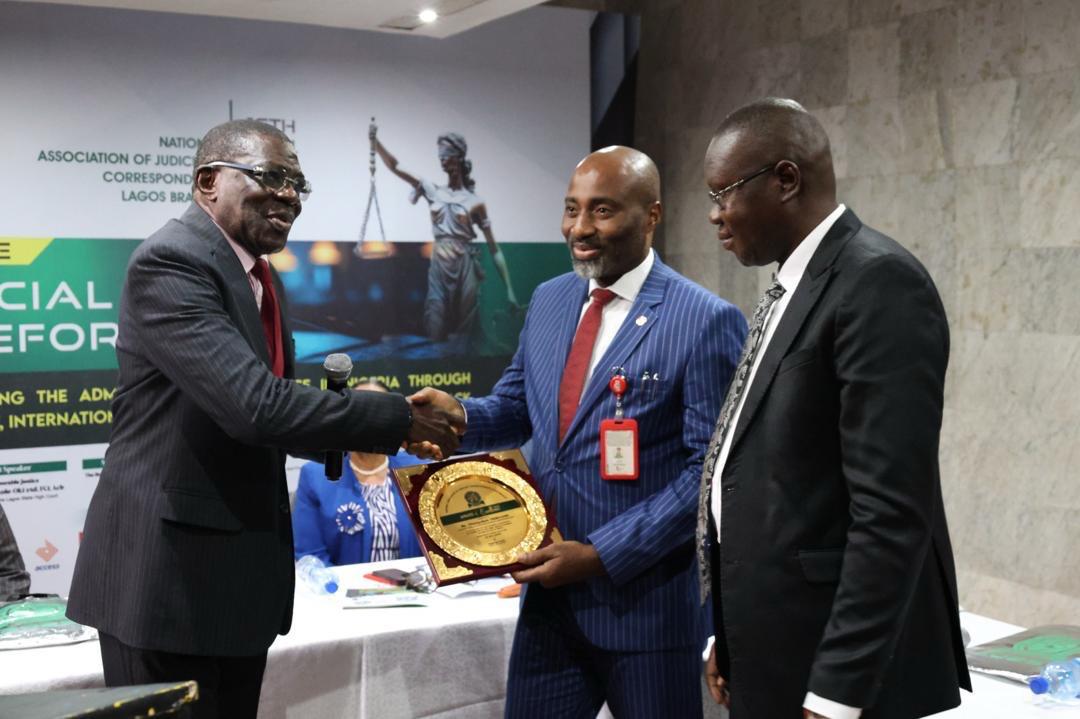
The Chairman of the Economic and Financial Crimes Commission (EFCC), Mr. Ola Olukoyede, has commended the Nigerian media for its critical role in the nation’s anti-corruption campaign, urging journalists to remain courageous, resilient, and united in holding public officials accountable.
Speaking at the Annual Lecture of the Nigerian Association of Judicial Correspondents (NAJUC) in Lagos through his Chiefof staff, Mr Ezekwe Michael, Olukoyede emphasized that the media must continue to serve as a vigilant watchdog in the pursuit of justice, good governance, and transparency.
“When efforts are acknowledged as they are today, it serves as a morale booster and reinforces our resolve to continue the fight with renewed vigour,” he stated.
He highlighted that an increasing number of Nigerians now view the anti-corruption fight as a patriotic duty, crediting the media’s persistent spotlight on corruption as instrumental in shaping public perception and encouraging civic responsibility.
“We must accept the painful truth that every corrupt act chips away at our collective dignity and undermines our national aspirations,” Olukoyede warned. “We can no longer treat corruption with levity. We must be firm, resolute, and united.”
The EFCC boss called for greater cross-sector collaboration, stressing that the media wields the power to influence public discourse, expose malfeasance, and foster a culture where integrity is championed and misconduct is condemned.
Justice Bankole-Oki: Time for Urgent Reform
Delivering the keynote address, Justice Folashade Bankole-Oki issued a strong call for sweeping reforms in Nigeria’s judicial system, warning that public confidence in the judiciary is in sharp decline.
“There is an urgent need to strengthen the administration of justice in Nigeria. Public trust has waned—and rightly so,” she said.
She advocated for a modern, technology-driven judiciary anchored in global best practices and greater public engagement to address systemic inefficiencies.
Citing innovations within the Lagos State Judiciary, she proposed the nationwide adoption of digital tools such as virtual hearings, e-filing systems, online dispute resolution platforms, and paperless trials as practical solutions to reduce delays and case backlogs.
Justice Bankole-Oki also urged the National Judicial Council (NJC) and state judicial bodies to prioritize secure electronic storage of evidence and case files. While acknowledging the potential of artificial intelligence in legal research and case management, she cautioned against over-reliance, stressing the importance of human oversight.
“Technology, media, international benchmarks, and public feedback are no longer optional—they are essential for building an efficient, transparent justice system,” she noted.
Media Responsibility and Judicial Integrity
Justice Bankole-Oki emphasized the need for responsible journalism, urging court reporters and media houses to avoid sensational headlines that could erode public confidence in the judiciary.
While rejecting restrictive proposals such as mandatory blogger registration, which she described as a threat to free speech, she called for a balance between media freedom and accountability. She encouraged journalists to verify information before publication and support protective mechanisms for whistleblowers while discouraging misuse of such frameworks.
Calls for Collaboration and Transparency
Also speaking at the event, the Chief Judge of the Federal High Court, Justice John Terhemba Tsoho—represented by Justice Ambrose Lewis-Allagoa—advocated for stronger collaboration between the judiciary and court correspondents to ensure accurate, fair, and constructive reporting.
Chairman of the occasion, Justice Taiwo Taiwo, commended the Chief Justice of Nigeria’s recent move to publish judicial nominees for public scrutiny, describing the initiative as a milestone in the drive toward transparency in judicial appointments.
NAJUC Chairman, Mr. Olugbenga Soyele, described the lecture’s theme—“Strengthening the Administration of Justice Through Technology, International Best Practices, Media, and Public Feedback”—as timely and crucial for a legal system undergoing reform.
The event concluded with the presentation of an Award of Excellence to EFCC Chairman Olukoyede in recognition of his unwavering commitment to Nigeria’s anti-corruption crusade.




-

 Society News5 years ago
Jamaican man beheads wife after finding out their 6 kids are not his
-
 Society News7 years ago
EXCLUSIVE: The Complete Story of Dolapo Awosika, John Fashanu and Prophet Kasali Sex Mess
-
 News6 years ago
Pastor Osagie Ize-Iyamu, His Membership Of Secret Cult, And Other Issues Touching On His Public Credentials Examined by Barr. PATRICK I. BIOSE
-

 News6 years ago
BREAKING: Ajimobi’s daughter-in-law blast Gov. Makinde, says gov can’t surpass ex-Oyo gov
-

 Society News6 years ago
The Rise and Fall of “Jumoke The Bread Seller”
-

 News6 years ago
BREAKING: 2 arrested as NAF begins investigations into Tolulope’s death
-
 Crime6 years ago
Exclusive: Female Aide Fingered In Oko Oloyun’s Murder + Banking Transactions That Nailed Husband
-

 News6 years ago
BREAKING: Police take over Edo House of Assembly as APC, Oshiomhole move to seize control


You must be logged in to post a comment Login