

Love
Are We Worshipping The Same God?


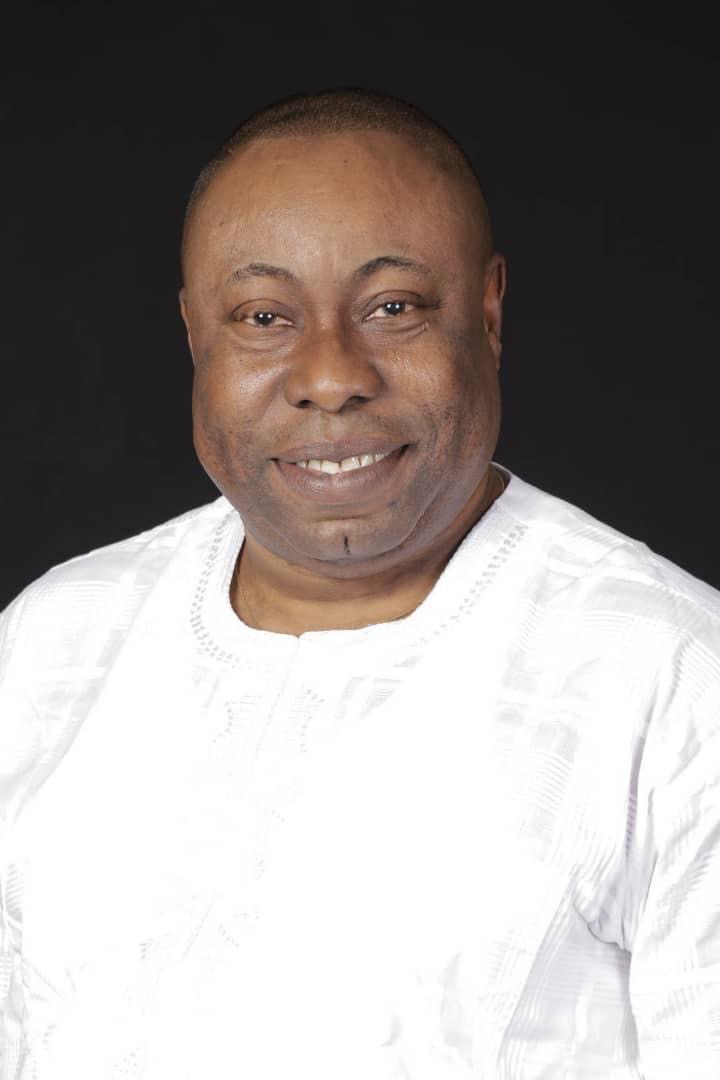
By
Akin Ogunlola, Esq.
The question, “are we worshipping the same God?”, is frequently answered in the affirmative. In an age marked by religious plurality and global interconnection, the claim that all traditions ultimately refer to a single divine reality carries obvious appeal. It promises harmony. It reduces tension. It allows for mutual recognition without requiring doctrinal agreement.
Yet the philosophical status of this claim is rarely examined with sufficient care.
To assert that different religions worship the same God is to make a claim about identity. Identity, however, is not established by shared vocabulary, overlapping functions, or moral resemblance. It requires criteria capable of distinguishing similarity from equivalence. Without such criteria, the assertion of sameness risks becoming an expression of goodwill rather than a defensible conclusion.
Many others have also claimed that all of mankind actually worship the same God under different names. Again, the claim is attractive because it promises harmony in a plural world. It suggests that beneath doctrinal disagreement lies a shared ultimate reality.
But what does this claim actually mean?
To say that different religions worship the same God is not merely to express goodwill. It is to assert identity. And identity is a philosophical matter.
In everyday life, we do not assume that two entities are identical simply because they share a name or perform similar functions. In law, two corporations may operate in the same industry and bear similar titles while remaining entirely distinct legal persons. Identity requires criteria. It cannot be inferred from resemblance alone.
Religious discourse deserves comparable precision.
When Christians speak of God, they typically refer to a singular, sovereign being associated with the biblical tradition and identified historically with Yahweh. Muslims refer to Allah, the one and indivisible source of authority described in the Qur’an. In both cases, God is conceived as exclusive: ultimate allegiance belongs to this one sovereign, and salvation or ultimate destiny is tied to alignment with that sovereignty.
Within Yoruba metaphysics, however, ultimate reality is articulated differently. At the center stands Olodumare, the transcendent source of existence. Yet divine agency is not exclusively centralized. The Orisa function as real expressions of cosmic order, each associated with particular dimensions of existence. Moral order operates through Ase (vital force) and Ori (destiny-consciousness), and reality is structured through complementarity rather than absolute dualism of God v. Satan, God v. Anti-God, or Good v. Bad.
This is not a matter of superficial difference. It concerns the architecture of ultimate reality.
In one framework, divine sovereignty is singular and exclusive. Worship is centralized. Eschatology is definitive. In the other, unity is preserved without collapsing plurality. Divine presence is distributed. Moral consequence is dynamic and cyclical rather than eternally bifurcated (heaven and hell).
If these structural differences are substantial, then the assertion that both traditions refer to the same being requires explanation.
The common argument for sameness usually rests on shared attributes. Both traditions speak of a creator. Both affirm moral accountability. Both describe a transcendent source of existence. From these similarities, it is inferred that the referent must be identical.
But shared attributes do not establish numerical identity.
Two beings could both create. Two systems could both affirm transcendence. Similarity of function does not entail sameness of being. If it did, many distinct entities would collapse into one.
The deeper question is whether radically different metaphysical architectures can refer to a single ultimate reality without contradiction. Can a God defined by exclusive sovereignty and eternal judgment be identical to a source structured through distributed divine agency and cyclical moral consequence? Perhaps. But such a claim requires argument. It cannot simply be assumed.
The tendency to assume sameness may arise from admirable motives. In societies marked by religious conflict, emphasizing common ground seems prudent. Yet intellectual clarity should not be sacrificed for rhetorical comfort.
Recognizing difference need not produce hostility. It may instead allow traditions to stand on their own conceptual terms rather than within borrowed categories. When Olodumare is equated uncritically with Yahweh or Allah, the risk is not merely semantic confusion. It is structural alteration. Translation, especially in conditions of unequal power, can transform as much as it preserves.
The question is not whether different religious communities can coexist peacefully. They can. The question is whether peace requires metaphysical equivalence.
It does not.
Interreligious dialogue becomes more robust when participants acknowledge that they may not be speaking of the same ultimate reality. Agreement on ethics does not require agreement on ontology. Cooperation does not require conceptual collapse.
Indeed, insisting that all traditions must converge upon one universal God may inadvertently diminish the internal coherence of traditions whose metaphysical structures are distinct. Yoruba metaphysics does not merely rename a familiar deity. It articulates a different architecture of reality.
To acknowledge this is not to deny shared human aspirations. It is to take conceptual difference seriously.
The modern world is increasingly plural. Pluralism, however, does not demand that all differences dissolve into unity. It demands the discipline to distinguish where unity ends, and divergence begins.
Perhaps the more productive question is not whether all religions worship the same God. Perhaps it is whether we are prepared to examine what we mean by “same.”
Without criteria, sameness becomes sentiment.
With criteria, it becomes philosophy.
Akin Ogunlola is currently writing a book, ‘Polycentric Divinity: Yoruba Metaphysics and the Question of the Universal God” which will be out soon.




-

 Society News5 years ago
Jamaican man beheads wife after finding out their 6 kids are not his
-
 Society News7 years ago
EXCLUSIVE: The Complete Story of Dolapo Awosika, John Fashanu and Prophet Kasali Sex Mess
-

 News6 years ago
Pastor Osagie Ize-Iyamu, His Membership Of Secret Cult, And Other Issues Touching On His Public Credentials Examined by Barr. PATRICK I. BIOSE
-

 News6 years ago
BREAKING: Ajimobi’s daughter-in-law blast Gov. Makinde, says gov can’t surpass ex-Oyo gov
-

 Society News6 years ago
The Rise and Fall of “Jumoke The Bread Seller”
-

 News6 years ago
BREAKING: 2 arrested as NAF begins investigations into Tolulope’s death
-

 Crime6 years ago
Exclusive: Female Aide Fingered In Oko Oloyun’s Murder + Banking Transactions That Nailed Husband
-

 News6 years ago
BREAKING: Police take over Edo House of Assembly as APC, Oshiomhole move to seize control


You must be logged in to post a comment Login