

News
Nigeria Pushes Back Against “Genocide” Narrative


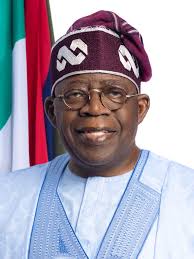
In recent weeks, Nigeria has found itself at the centre of renewed international commentary, as some foreign platforms and online influencers alleged that terrorists in the country are waging a campaign of genocide against Christians The federal government has moved swiftly to denounce these claims, describing them as “false, baseless, despicable, and divisive.”
Officials insist that while Nigeria faces undeniable security challenges, framing them as a religious war grossly misrepresents the situation on the ground. “Portraying our struggle against terrorism as a systematic attempt to eradicate Christians is not only inaccurate but also dangerous,” one senior government aide told Weekly Magazine. “It reduces a complex conflict to a simplistic, sectarian narrative—and that is precisely what terrorists want.”
Nigeria’s ongoing battle with extremist groups—ranging from Boko Haram to the Al-Qaeda–linked faction Ansaru—has been brutal and costly. But, the government emphasizes that these groups attack indiscriminately. “Muslims, Christians, and even those outside organized religion have suffered alike,” military officials stress. Villages in the North-East, markets in the Middle Belt, and even mosques have been bombed or raided by insurgents, undermining the idea of a targeted religious campaign.
Data from security operations between May 2023 and February 2025 support this assertion. In that period alone, more than 13,500 terrorists and criminals were neutralized, while close to 10,000 hostages were freed across multiple theatres of war. “Every Nigerian life matters,” the Defence Headquarters declared. “No community is singled out for protection—or for abandonment.”
Perhaps the strongest rebuttal to allegations of inaction came just last month, when Nigerian security forces pulled off one of their most high-profile operations to date. The top leadership of Jama’atu Ansarul Muslimina fi-Biladis Sudan—better known as Ansaru—was captured after years of pursuit. Among those arrested were Mahmud Muhammad Usman, alias Abu Bara’a, the group’s self-styled Emir, and his deputy, Mahmud al-Nigeri For many analysts, this marked a turning point. “Capturing Ansaru’s Emir is equivalent to cutting the head off the snake,” one counterterrorism researcher in Abuja told us. “It shows the state is not only on the offensive but also capable of dismantling networks that feed the extremist narrative abroad.”
The government is also keen to highlight strides in justice and accountability. Since the first wave of Boko Haram trials began, seven batches of suspects have been prosecuted, yielding over 700 convictions. The eighth round of prosecutions is now underway, underscoring a long-term commitment to dismantling the infrastructure of terror. Meanwhile, both the Armed Forces and the Police have pursued disciplinary actions against their own. Several court martials and internal prosecutions, officials say, demonstrate a growing culture of accountability—an effort to match force with fairness.
At the heart of Nigeria’s pushback is a reminder of its plural identity. The country is not only home to one of the world’s largest Muslim populations but also to some of the globe’s most vibrant Christian communities. Nigeria boasts the largest Anglican congregation and is a hub of Pentecostal dynamism. “Christianity is neither endangered nor marginalized here,” a senior presidential adviser insists. Government officials further point to the inclusivity of national leadership: the current heads of both the Armed Forces and the Police are Christians. For them, this fact alone undermines any suggestion of systemic religious bias in the country’s security apparatus.
Since assuming office, President Bola Tinubu has repeatedly cast national security as central to his administration’s mission. His Renewed Hope Agenda, though primarily economic, places a premium on stability and justice. “Without safety, there can be no prosperity,” he declared at a recent military graduation ceremony. For Abuja, then, the message to the world is clear: Nigeria is not a battleground for religious annihilation but a diverse nation fighting to preserve its unity against a ruthless, ideology-driven enemy.
As one government official puts it: “Foreign commentators may have the luxury of writing in absolutes. But for us, the reality is lived daily—it is messy, complex, and costly. What we need is not reductionist narratives of genocid but genuine support in defeating a global threat.




-

 Society News5 years ago
Jamaican man beheads wife after finding out their 6 kids are not his
-
 Society News7 years ago
EXCLUSIVE: The Complete Story of Dolapo Awosika, John Fashanu and Prophet Kasali Sex Mess
-
 News6 years ago
Pastor Osagie Ize-Iyamu, His Membership Of Secret Cult, And Other Issues Touching On His Public Credentials Examined by Barr. PATRICK I. BIOSE
-

 News6 years ago
BREAKING: Ajimobi’s daughter-in-law blast Gov. Makinde, says gov can’t surpass ex-Oyo gov
-

 Society News6 years ago
The Rise and Fall of “Jumoke The Bread Seller”
-
 News6 years ago
BREAKING: 2 arrested as NAF begins investigations into Tolulope’s death
-
 Crime6 years ago
Exclusive: Female Aide Fingered In Oko Oloyun’s Murder + Banking Transactions That Nailed Husband
-
 News6 years ago
BREAKING: Police take over Edo House of Assembly as APC, Oshiomhole move to seize control


You must be logged in to post a comment Login