

Featured
Let’s Save el-Rufai From el-Rufai


By
Kunle Oyatomi
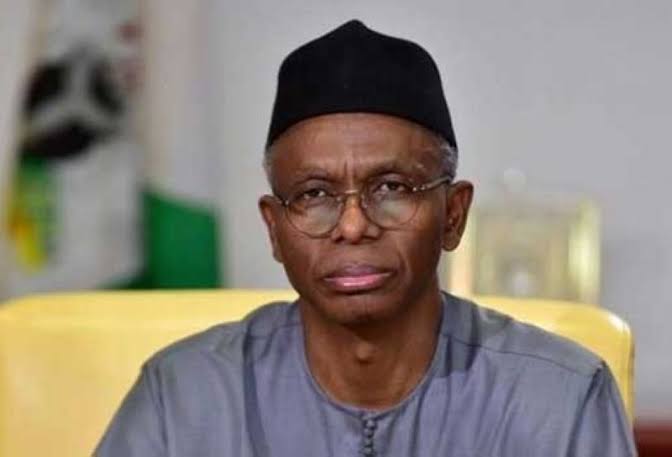
Tyrion Lannister. Though a fictional character in Game of Thrones, that was the name that rang in my head as I read former governor of Kaduna State, Mallam Nasir el-Rufai’s recent comment about President Bola Tinubu on the online platform of Northern mouthpiece, Daily Trust.
According to the nauseating story, el-Rufai, still visibly angry about his inability to secure a top spot in the current administration, described the Tinubu administration as worse than any military regime Nigeria has ever experienced.
What was not surprising was that the Imp—apologies to David Benioff and D. B. Weiss, creators of Game of Thrones—chose to make the statement during the visit of a perennial contestant for the highest political office in the land, former Vice President Atiku Abubakar.
Partly speaking during the visit, el-Rufai said:
“It is even a disgrace. I mean, for people to behave the way they are behaving, it means that all the years of saying that we are for democracy and NADECO, all the claims that we are fighting for true federalism and so on, it was all a pretense, all fake again. Because this government (Tinubu administration) is trying to centralize everything instead of devolving power to the lower levels.”
Played by American actor Peter Dinklage, Tyrion Lannister, otherwise known as the Imp, is witty, astute and discerning. For followers of that captivating series, he is a delight over the course of eight seasons. But beyond the obvious similarity in stature, el-Rufai would be fortunate to claim even two percent of Tyrion’s wisdom—especially at this time when he appears completely unable to tell his left from his right.
When shaky politicians like el-Rufai, who cannot even distinguish their directions, make such comments, they provoke the average Nigerian to see politicians as comical characters, only fit for their dirty games.
How, then, does the average Nigerian comprehend how a man who only a few months ago was angling for a slot in the Tinubu government suddenly sees it as authoritarian?
The irony is hard to miss. If anyone has ever embodied authoritarian tendencies in Nigeria’s recent history, it is el-Rufai—a beastly autocrat with a raging Napoleon complex.
Recall his infamous 2019 outburst on national television when the international community’s role in Nigeria’s elections was raised:
“We are waiting for the person who will come and intervene. They will go back in body bags because nobody will come to Nigeria and tell us how to run our country.”
And long before that, in 2016, a socio-cultural group, Net-zit Patriotic Front, bluntly described him as “mentally imbalanced and unfit” to govern. These disparaging remarks were made after they had seen el-Rufai display his Napoleon syndrome during his autocratic rule in Kaduna, where he enabled terrorists.
But can Nigerians take such a man seriously? Absolutely not.
Yes, Nigeria has problems today, but comparing the democracy that Nigerians currently enjoy under the Tinubu government to military rule is outrageous.
Those who lived under military regimes, including Tinubu himself, know how rugged it was. Was it the lack of freedom suffered by the media? Newspapers were shut down, journalists were jailed, private properties were seized, rights were restricted, and people could not talk freely. None of these things have happened under the Tinubu administration.
Under military rule, citizens could not vote for their leaders. Zombies—apologies to Fela Kuti—ruled by coercion, and anyone who opposed them risked arrest or worse. Has that been experienced under the Tinubu administration? No. Since Jagaban assumed office, local government elections have been ongoing, while state governors have also been elected. So, where is the dictatorial rule?
Like the Presidency said, el-Rufai could benefit from some professional counselling to steer him away from his recent hallucinations.
Oyatomi, Former Editor (Sunday Vanguard), Author (Fingerprints, 2008) and Lawyer, is a member of the Board of Independent Media and Policy Initiative (IMPI), a think tank based in Abuja.




-

 Society News5 years ago
Jamaican man beheads wife after finding out their 6 kids are not his
-
 Society News7 years ago
EXCLUSIVE: The Complete Story of Dolapo Awosika, John Fashanu and Prophet Kasali Sex Mess
-
 News6 years ago
Pastor Osagie Ize-Iyamu, His Membership Of Secret Cult, And Other Issues Touching On His Public Credentials Examined by Barr. PATRICK I. BIOSE
-

 News6 years ago
BREAKING: Ajimobi’s daughter-in-law blast Gov. Makinde, says gov can’t surpass ex-Oyo gov
-

 Society News6 years ago
The Rise and Fall of “Jumoke The Bread Seller”
-

 News6 years ago
BREAKING: 2 arrested as NAF begins investigations into Tolulope’s death
-
 Crime6 years ago
Exclusive: Female Aide Fingered In Oko Oloyun’s Murder + Banking Transactions That Nailed Husband
-

 News6 years ago
BREAKING: Police take over Edo House of Assembly as APC, Oshiomhole move to seize control


You must be logged in to post a comment Login