
News
Fact-Checkers Unmask Synthetic Voice And Text Attributed To Peter Obi’s Son


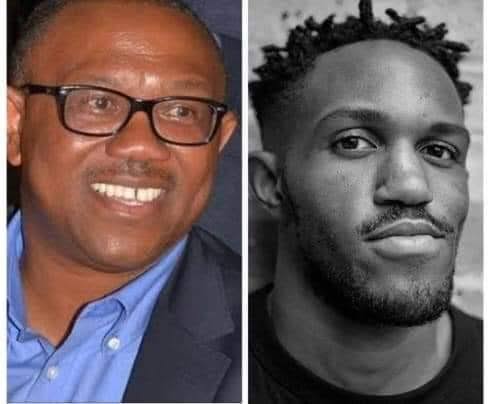
Confusion erupted on social media this week after a voice note and a written statement, allegedly from Oseloka, the son of Labour Party’s 2023 presidential candidate, Peter Obi, circulated widely in his defense. Both items—initially believed to be authentic responses to viral accusations—have now been confirmed to be artificial intelligence (AI) creations, sparking fresh alarm about the rising threat of digital manipulation in Nigeria’s political landscape.
The audio recording, which was styled to sound natural and emotionally persuasive, was widely shared across WhatsApp, Facebook, and X (formerly Twitter). It purported to capture Obi’s son passionately rejecting allegations and affirming his integrity. A matching written statement attributed to him surfaced alongside, reinforcing the same themes.
But within hours, independent fact-checkers and digital forensic analysts debunked both. Experts identified tonal distortions, synthetic markers, and awkward pacing in the voice note—hallmarks of AI text-to-speech systems. The written statement also raised red flags, displaying linguistic patterns and repetitive phrasing consistent with machine-assisted output rather than authentic human writing.
The controversy escalated when AI-generated images portraying Obi’s son in misleading contexts began to circulate. These, too, were quickly exposed as fabrications, but not before they had fueled heated debates online.
Analysts warn that the incident is a sign of what is to come as Nigeria heads toward the 2027 elections. With AI tools now capable of creating convincing but fake voices, videos, and texts, political disinformation campaigns could become far harder to detect—and even more damaging to public trust.
“We’re entering an era where seeing isn’t believing, and hearing isn’t proof,” said digital rights advocate Ayo Oke. “These technologies can be turned into weapons of disinformation to sway public opinion in minutes.”
Observers note that the spread of deepfakes is not unique to Nigeria, but the country’s volatile political climate and fragile information ecosystem make it especially vulnerable. Civil society groups are urging Nigerians to verify sources, treat sensational content with caution, and remain vigilant against the rising tide of AI-driven propaganda.
For many, the Obi deepfake episode is more than a scandal—it is a wake-up call. In a digital age where voices can be cloned and words fabricated, the truth itself is under siege.




-

 Society News5 years ago
Jamaican man beheads wife after finding out their 6 kids are not his
-
 Society News7 years ago
EXCLUSIVE: The Complete Story of Dolapo Awosika, John Fashanu and Prophet Kasali Sex Mess
-
 News6 years ago
Pastor Osagie Ize-Iyamu, His Membership Of Secret Cult, And Other Issues Touching On His Public Credentials Examined by Barr. PATRICK I. BIOSE
-

 News6 years ago
BREAKING: Ajimobi’s daughter-in-law blast Gov. Makinde, says gov can’t surpass ex-Oyo gov
-

 Society News6 years ago
The Rise and Fall of “Jumoke The Bread Seller”
-

 News6 years ago
BREAKING: 2 arrested as NAF begins investigations into Tolulope’s death
-
 Crime6 years ago
Exclusive: Female Aide Fingered In Oko Oloyun’s Murder + Banking Transactions That Nailed Husband
-

 News6 years ago
BREAKING: Police take over Edo House of Assembly as APC, Oshiomhole move to seize control


You must be logged in to post a comment Login