

Featured
MMIA Renovation Bruhaha—What Do Nigerians Really Want?


By Tunde Moshood
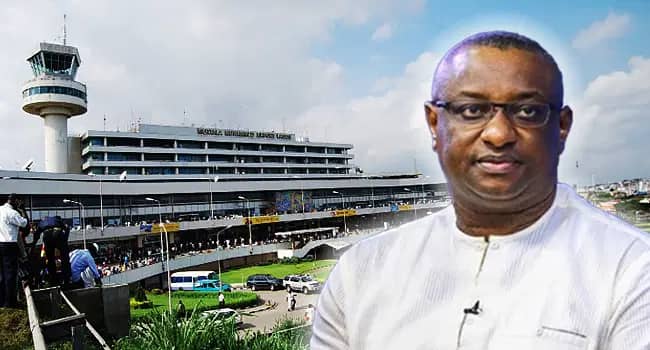
When news broke that the Federal Executive Council had approved N712 billion for the complete renovation of Murtala Muhammed International Airport (MMIA) Terminal 1 in Lagos, the backlash was swift and loud—mostly from the comfort zones of social media. Suddenly, everyone became an infrastructure economist, a seasoned aviation planner, or worse, a self-styled corruption watchdog. But in all this noise, one crucial question has been ignored:
What do Nigerians really want?
Do we want a modern, world-class international airport that can stand toe-to-toe with global benchmarks—or just another patchwork job that barely scratches the surface of over four decades of infrastructural decay?
Let’s face the facts. MMIA Terminal 1 was commissioned in 1979, designed to handle fewer than a million passengers annually. Today, it receives over 8 million passengers each year, often forcing travelers through a moribund, smelly, and visibly dilapidated terminal. The air conditioning system barely works, the conveyor belts are prone to breakdowns, and the aesthetics resemble a government office stuck in the 1980s.
Yet, when the Federal Government, under President Bola Ahmed Tinubu, finally approved a comprehensive overhaul of the terminal—the very project Nigerians have clamored for—skepticism erupted, not from a place of genuine concern, but from a reflexive culture of politicized criticism.
The Cost of Modernity
Let’s talk numbers—and you can Google this.
- Ethiopia’s Bole International Airport expansion cost over $345 million
- Angola’s new Luanda International Airport is projected to cost $3 billion
- Kigali International Airport in Rwanda is being rebuilt at $1.3 billion
- Abidjan’s new airport terminal cost over $300 million
And these are in far smaller economies with less air traffic than Nigeria.
So, when you consider that N712 billion, at today’s exchange rate of roughly ?1500 to $1, equals approximately $475 million, the figures begin to make sense. This isn’t just a cosmetic facelift—it’s a complete structural overhaul with passenger processing at its core. That includes:
- New baggage handling systems
- Smart security infrastructure
- Modern terminals and lounges
- ICT upgrades
- Aerobridges
- Vertical circulation systems
- A modern fire-fighting unit
- Energy-efficient systems
- Integration with multimodal transport networks
In global aviation terms, this isn’t extravagant. It’s standard.
The Keyamo Factor
It’s baffling that some critics are willing to ignore the impressive leadership of the current Minister of Aviation and Aerospace Development, Festus Keyamo SAN, just to score another social media point.
Since assuming office, Keyamo has tackled aviation reform head-on—from resolving longstanding Bilateral Air Services Agreement (BASA) bottlenecks to improving Nigeria’s ICAO safety rating from 49% to 75.5%, and even ensuring compliance with Cape Town Convention protocols. This opens the door for Nigerian airlines to lease aircraft under fairer conditions from global lessors.
Keyamo’s legal background has proven a strategic asset. Instead of outsourcing complex aviation legal documentation to foreign consultants, he’s taken charge, ensured clarity, and driven agreements with efficiency—an approach that industry insiders now praise.
Yet, because he’s not a pilot or a technical engineer, some feel justified in questioning his every move. But isn’t leadership about vision, coordination, and strategic thinking?
The “Cafeteria Expert” Syndrome
One of the curious traits of the Nigerian commentary space is how everyone becomes an expert overnight. From politics to medicine to aviation, the loudest voices often come from those with no real-world experience in the fields they critique.
Some of the fiercest critics of the MMIA renovation have never been involved in terminal design, airport operations, or aviation infrastructure development. Their closest proximity to the sector may be operating a kiosk near the tarmac.
Yet, these are the self-appointed “experts” dismissing a N712 billion project simply because the figures sound big. We must stop mistaking uninformed criticism for activism.
Time for Constructive Criticism, Not Cynicism
No one is saying government projects should escape scrutiny. On the contrary, robust, fact-based criticism is vital in a democracy. But that criticism must be informed, balanced, and constructive.
Not every initiative is a scam. Not every official is a thief. The default belief that everyone in government is out to loot only breeds cynicism—not solutions.
Instead of politicizing this landmark renovation, why not call for a public forum on the project? Invite engineers, architects, procurement experts, and aviation regulators to explain the breakdown of the budget to the public. That’s how mature democracies operate—not by dismissing every major project as fraudulent from day one.
The MMIA Project Is More Than a Building
Let’s not forget: Murtala Muhammed International Airport, Lagos, is Nigeria’s economic and diplomatic gateway. It is the first impression investors, diplomats, and visitors get of our country.
A poor first impression leads to a poor perception of the country. The new terminal must reflect the ambition of a nation determined to compete in the 21st-century global economy.
If we truly want a Nigeria that works, we must begin to support visionary projects—especially when they are backed by proven leadership, transparent processes, and a clear national need.
The N712 billion MMIA renovation is not just about fixing a building—it’s about rewriting Nigeria’s aviation story.
So, Nigerians, What Do You Really Want?
Do you want another cycle of mediocrity, where we spend little and get even less?
Or do you want infrastructure that reflects our population, economic potential, and national pride?
The choice is ours.
Tunde Moshood is the Special Adviser on Media and Communications to the Honourable Minister of Aviation and Aerospace Development.




-

 Society News5 years ago
Jamaican man beheads wife after finding out their 6 kids are not his
-
 Society News7 years ago
EXCLUSIVE: The Complete Story of Dolapo Awosika, John Fashanu and Prophet Kasali Sex Mess
-
 News6 years ago
Pastor Osagie Ize-Iyamu, His Membership Of Secret Cult, And Other Issues Touching On His Public Credentials Examined by Barr. PATRICK I. BIOSE
-

 News6 years ago
BREAKING: Ajimobi’s daughter-in-law blast Gov. Makinde, says gov can’t surpass ex-Oyo gov
-

 Society News6 years ago
The Rise and Fall of “Jumoke The Bread Seller”
-
 News6 years ago
BREAKING: 2 arrested as NAF begins investigations into Tolulope’s death
-
 Crime6 years ago
Exclusive: Female Aide Fingered In Oko Oloyun’s Murder + Banking Transactions That Nailed Husband
-

 News6 years ago
BREAKING: Police take over Edo House of Assembly as APC, Oshiomhole move to seize control


You must be logged in to post a comment Login