

News
Nigerian Government Grounds Over 60 Private Jets in Crackdown on Import Duty Evasion


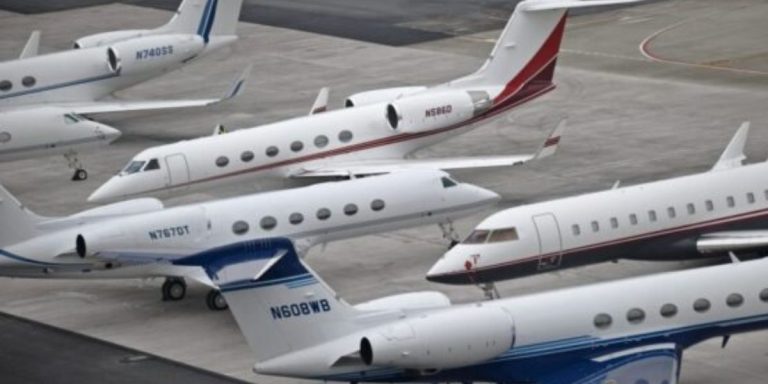
In a sweeping enforcement operation, the Nigerian Government has grounded more than 60 private jets across key airports in the country, including Murtala Muhammed International Airport in Lagos and Nnamdi Azikiwe International Airport in Abuja. This unprecedented move, led by the Nigeria Customs Service (NCS), is part of a broader clampdown on wealthy aircraft owners who have allegedly defaulted on the payment of import duties running into several billions of naira.
The affected aircraft include high-end models such as the Bombardier Global 6000, 6500, and 7500 series, widely regarded as ultra-luxury jets used by top business executives, politicians, and high-net-worth individuals. Customs authorities said many of these aircraft were operating within Nigerian airspace without proper documentation or having evaded duties owed to the government.
According to sources within the NCS, some of the aircraft were brought into the country through temporary import permits or other waivers but remained in the country indefinitely—violating the terms of such permits. This led to concerns that the federal government was losing substantial revenue due to regulatory loopholes and non-compliance by jet owners.
As part of the enforcement effort, customs officials, working in collaboration with aviation authorities and security agencies, sealed several private hangars in Lagos and Abuja. Operations at these facilities have been suspended, affecting charter services and private aviation businesses.
Passengers booked on private flights were left stranded, and private flight operators are reportedly in talks with the government to resolve the impasse. Several aircraft owners have been asked to produce proof of duty payments or face legal actions, including asset forfeiture.
The crackdown comes amid broader efforts by the Nigerian government to increase non-oil revenue, especially as the country grapples with fiscal challenges, inflation, and rising debt. Customs authorities argue that enforcing compliance within the elite private aviation sector sends a strong message that no entity is above the law.
Critics, however, warn that the move could discourage investment in the aviation sector and harm Nigeria’s reputation among wealthy investors and international charter service providers. Aviation industry experts have also called for clearer and more streamlined importation rules to avoid future compliance issues.
Speaking at a press briefing, Comptroller-General of Customs, Adewale Adeniyi, said:
“This operation is not targeted at any individuals. It is a lawful step to enforce the payment of duties rightly owed to the Federal Government. We are open to resolving this administratively with aircraft owners who come forward in good faith.”
Meanwhile, some private jet owners and operators under the umbrella of the Association of Private Jet Owners of Nigeria (APJON) have expressed concerns about the process. They claim the government failed to provide adequate notice and that many aircraft owners were unaware they were non-compliant due to changing customs regulations.
Negotiations between stakeholders and government officials are ongoing, with the possibility of some aircraft being released upon partial payment or agreement to settle dues.
This clampdown marks one of the most significant actions ever taken against private aviation interests in Nigeria. It reflects a growing desire by the Nigerian government to tighten enforcement of fiscal laws, boost internal revenue, and close longstanding regulatory gaps that have allowed the wealthy to operate with limited oversight.
As the situation unfolds, the aviation sector—and the broader business community—will be watching closely to see whether the government maintains its stance or softens its approach under pressure from powerful interest groups.




-

 Society News5 years ago
Jamaican man beheads wife after finding out their 6 kids are not his
-
 Society News7 years ago
EXCLUSIVE: The Complete Story of Dolapo Awosika, John Fashanu and Prophet Kasali Sex Mess
-

 News6 years ago
Pastor Osagie Ize-Iyamu, His Membership Of Secret Cult, And Other Issues Touching On His Public Credentials Examined by Barr. PATRICK I. BIOSE
-

 News6 years ago
BREAKING: Ajimobi’s daughter-in-law blast Gov. Makinde, says gov can’t surpass ex-Oyo gov
-

 Society News6 years ago
The Rise and Fall of “Jumoke The Bread Seller”
-

 News6 years ago
BREAKING: 2 arrested as NAF begins investigations into Tolulope’s death
-

 Crime6 years ago
Exclusive: Female Aide Fingered In Oko Oloyun’s Murder + Banking Transactions That Nailed Husband
-
 News6 years ago
BREAKING: Police take over Edo House of Assembly as APC, Oshiomhole move to seize control


You must be logged in to post a comment Login