

World News
UK Supreme Court Rules Legal Definition of ‘Woman’ Excludes Transgender Women


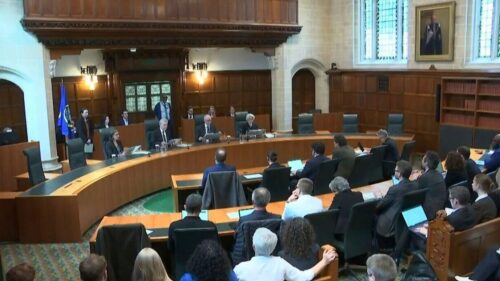
The United Kingdom’s Supreme Court has ruled that, under the law, the definition of a woman refers strictly to biological sex, excluding transgender women—even those with Gender Recognition Certificates (GRCs).
In a landmark judgment delivered on Wednesday, the court sided with gender rights advocacy group For Women Scotland (FWS), which had challenged Scottish government legislation that extended the legal definition of “woman” to include transgender women under equality laws.
The 88-page ruling clarified a long-standing debate around the interpretation of the Equality Act 2010, particularly regarding sex-based rights and protections. The court held that the concept of sex under the Act is “binary: a person is either a woman or a man,” and that biological sex must be the defining factor for legal definitions involving single-sex spaces and services.
FWS had argued that expanding the legal definition of woman to include transgender women could undermine protections specifically created for biological women. Their concerns focused on access to single-sex facilities such as women’s shelters, hospital wards, and sporting events.
The Supreme Court agreed with the group’s position, while noting that the decision “should not be seen as a victory for one group over another,” and called for respectful dialogue around sensitive societal issues.
Susan Smith, co-founder of FWS, welcomed the judgment, saying, “Sex is real, and women can now feel secure that spaces and services designated for women are just that—for women.”
The ruling has also sparked strong reactions from political figures. UK Conservative Party leader Kemi Badenoch hailed the judgment as “a victory,” stating, “Saying ‘trans women are women’ was never true in fact, and now isn’t true in law either.”
“This is a victory for all the women who faced personal abuse or lost their jobs for stating the obvious,” she added.
The Equality and Human Rights Commission (EHRC) responded cautiously, stating it was pleased with the clarity the ruling provides but would need time to study the full implications for policy and equality protections.
The decision reflects a broader global shift in legal interpretations of gender and sex, particularly in Western democracies. Shortly after being sworn in for a second term, former U.S. President Donald Trump signed an executive order mandating federal recognition of only two sexes—male and female—while cancelling diversity, equity, and inclusion initiatives.
Weeks later, UK Prime Minister Keir Starmer announced that his government would redirect portions of the UK’s foreign aid budget to supplement defence spending, a move some analysts see as aligning with the Trump-era “national interest first” approach.
As debates around gender identity, rights, and public policy continue to evolve, the UK Supreme Court’s ruling marks a significant legal precedent likely to shape discussions on sex-based rights and equality legislation for years to come.




-

 Society News5 years ago
Jamaican man beheads wife after finding out their 6 kids are not his
-
 Society News7 years ago
EXCLUSIVE: The Complete Story of Dolapo Awosika, John Fashanu and Prophet Kasali Sex Mess
-

 News6 years ago
Pastor Osagie Ize-Iyamu, His Membership Of Secret Cult, And Other Issues Touching On His Public Credentials Examined by Barr. PATRICK I. BIOSE
-

 News6 years ago
BREAKING: Ajimobi’s daughter-in-law blast Gov. Makinde, says gov can’t surpass ex-Oyo gov
-

 Society News6 years ago
The Rise and Fall of “Jumoke The Bread Seller”
-

 News6 years ago
BREAKING: 2 arrested as NAF begins investigations into Tolulope’s death
-

 Crime6 years ago
Exclusive: Female Aide Fingered In Oko Oloyun’s Murder + Banking Transactions That Nailed Husband
-

 News6 years ago
BREAKING: Police take over Edo House of Assembly as APC, Oshiomhole move to seize control


You must be logged in to post a comment Login