

Featured
Where The Rules Of Conduct Is Emotion, It Is Difficult To Defend The Right And Rebuke The Wrong


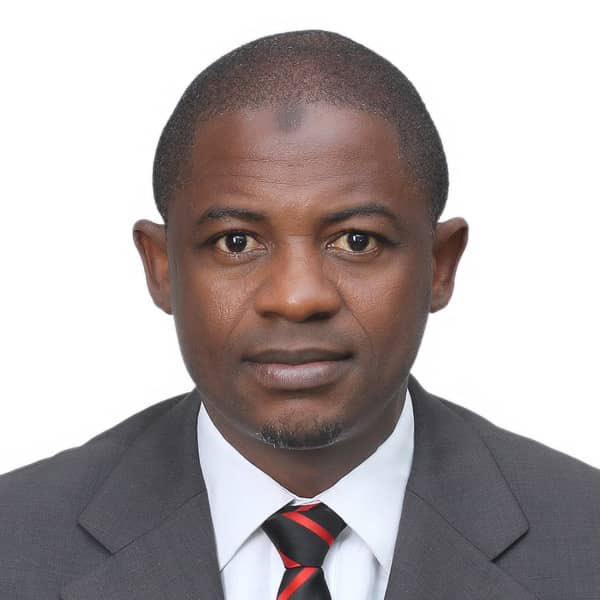
By: Shehu Bashur, Esq.
It is often jocularly said that Nigeria is the most complex and complicated nation in the world. This nation is home to many nations within, whose thinking, reasoning, actions, reactions, words, and utterances are determined by a variety of reasons.
You can never get the best of the right or the worst of the wrong in any situation, because what appears right to you—decently and ideally so—may be wrong to someone else. The justification for a yes or no is often based on the personal interest and emotion of the “arbiter,” and not necessarily on the merit of the matter.
The society is usually polarized by loyalty to religious sentiments, tribal connections, political affiliations, economic benefits, and other self-serving considerations.
We have had several experiences where people defend today what they opposed yesterday—or oppose today what they defended yesterday.
Is it not the same Nigeria where some people celebrated an attempted coup and wished it had succeeded against a democratically elected government?
Is it not the same Nigeria where some people see bandits being killed by security forces as “their sons,” and thus ask the Federal Government to dialogue with terrorists instead of eradicating them through military operations?
Is it not the same Nigeria where some ignorant people went into a dancing frenzy upon hearing that America was coming to bomb their own country—simply because they wanted to destroy the government of a man they do not like?
Is it not the same Nigeria where internet scammers and fraudsters—the so-called “Yahoo-Yahoo” boys—are now more celebrated for making money through fraud than a hardworking bricklayer sweating under the sun?
Have we not seen scenarios where a cocaine pusher, caught by authorities, was defended as a “hustler,” while ordinary citizens campaigned for his release?
Is it not the same country where people from certain communities prevented law enforcement officers from arresting a suspect involved in heinous corruption, calling it a witch-hunt?
Is it not the same country where a government official, genuinely executing state laws to prevent illegal activities, is accused of bias by those who benefit from such illegality?
Is it not the same country where some people call for the reduction of EFCC’s powers so that corrupt politicians and cybercriminals can have a field day to steal and swindle the people?
Is it not the same country where so-called activists protested for years against alleged military attacks on civilians—condemning military involvement in civil policing operations—yet now praise a military man for meddling in a land dispute simply because the civilian authority involved is someone they loathe?
Is it not the same country where people protest for the discontinuation of criminal cases against felons who orchestrated the killings of many innocent citizens?
We have witnessed cases where politically exposed individuals encroached on land, grabbed it, displaced the lawful owners, and altered the title documents in their favour—and some still called it “proof of power and influence” instead of the criminality it truly is.
Have we not seen situations where “awon omo onile” (land grabbers) return to demand that you repurchase the land their forefathers sold to you years ago? God help you if you refuse—they will take the house by force.
There was even a scenario where a murder suspect was publicly canvassed for and calls were made for his release, even while his prosecution was ongoing in court.
The same people who condemned the military for participating in the #EndSARS protest are now commending the same military for engaging in civil land matters on “illegal” guard duties. Is this paradox not too embarrassing?
We were here when certain individuals castigated and denigrated the Supreme Court, calling the Justices unprintable names and accusing them of corruption. Yet when called to defend such allegations, their supporters launched a campaign of calumny, calling the investigation “witch-hunting.” Ironically, these same people will later demand judicial diligence.
The scenarios go on and on. And that is why I always say: in this country, what is right may not necessarily be seen as right—as enshrined in the letters of the law—but rather as interpreted through the mentality of those judging the law.
A man who has benefited from an act prohibited by law but was never punished is most likely to condemn the enforcement of that same law on a fellow lawbreaker.
A man who dislikes the personalities in government will see nothing right in the enforcement of ethical codes by those authorities. It is a web of entanglement that will take years—and aggressive mental reconstruction—to untangle.
A tribal bigot who violates the law will view the enforcement of that law as a personal attack if the enforcer is not from his tribe.
In this country, we are so accustomed to applying the lubricant of ego, emotion, and sentiment in all that we do. We are easily carried away by small privileges. An iPhone owner sees an Android user as inferior.
When a fight breaks out in a commercial bus, the next thing you hear is, “Do you know who I am?” Everyone is a “big man” in both mental and physical posture.
This mentality is steering our course—and dangerously so. A uniformed man sees himself as above everyone else, regardless of civil service hierarchy. Privilege becomes a dividend to be shared only among a select few.
A politician with a minor appointment becomes the “lord of the ring” in the arena of contest. He knocks everyone down and shouts others into silence in a show of supremacy. It is a plague we must rid our society of.
This plague has become so endemic that law and order are no longer defined by our statutes, but by the emotions of the majority. That is why, often, the guilty go free while the innocent are unfairly punished.
If not for pride and sentiment, many issues in this country would not escalate the way they do. Handling provocative situations with decorum—even when you are the superior—is not weakness. Emotional control is a unique branch of intelligence on its own.
No matter our perception of any situation, one fundamental truth remains: we cannot employ the force of emotion in our motion toward progress without clogging the wheel of that progress.
The identity of officers or the personality of officials enforcing the law should not matter; the focus must always remain on the law itself.
What is right is right. You cannot build something on nothing and expect it to stand. We must agree that we have a country to build together—a country that can withstand the tests of time, intimidation, division, crime, provocation, subversion, and attempted invasion.
When we focus on the future, we will respect our collective resolve never to compromise anything that could truncate our shared destiny. Only then can we build a nation saner than the sanest climes.
GOD IS HERE.




-

 Society News5 years ago
Jamaican man beheads wife after finding out their 6 kids are not his
-
 Society News7 years ago
EXCLUSIVE: The Complete Story of Dolapo Awosika, John Fashanu and Prophet Kasali Sex Mess
-
 News6 years ago
Pastor Osagie Ize-Iyamu, His Membership Of Secret Cult, And Other Issues Touching On His Public Credentials Examined by Barr. PATRICK I. BIOSE
-

 News6 years ago
BREAKING: Ajimobi’s daughter-in-law blast Gov. Makinde, says gov can’t surpass ex-Oyo gov
-

 Society News6 years ago
The Rise and Fall of “Jumoke The Bread Seller”
-

 News6 years ago
BREAKING: 2 arrested as NAF begins investigations into Tolulope’s death
-

 Crime6 years ago
Exclusive: Female Aide Fingered In Oko Oloyun’s Murder + Banking Transactions That Nailed Husband
-

 News6 years ago
BREAKING: Police take over Edo House of Assembly as APC, Oshiomhole move to seize control


You must be logged in to post a comment Login