




By
Olabode Opeseitan
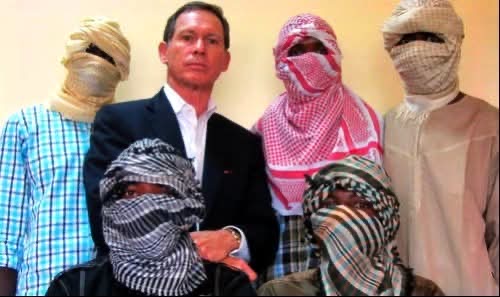
On paper, he is an unusually well-travelled figure, gliding between mining boardrooms in Perth, policy salons in Abuja, and the dust choked scrub of Sambisa Forest. The man who emerges from his public profiles is a kind of polymath of extractive capitalism: senior executive at Australia’s storied WMC, architect of Nigeria’s mining reforms, presidential adviser, specialist negotiator on the release of the Chibok girls, and now the visionary chairman of a “world class” lithium play that promises to carry Nigeria from crude oil to electric vehicles in a single narrative arc. It is a story perfectly tuned to the moment: green transition, frontier markets, impact flavoured capitalism. It is a story told with the easy confidence of someone accustomed to being believed.
Look more closely, though, and the story begins to fray at the edges. The impressive titles: “special adviser”, “presidential envoy”, “architect of the 2007 Mining Act”, tend to appear in interviews, corporate biographies and friendly Nigerian features, each citing the others in a kind of closed loop validation. The doctorate in political geography from the University of Melbourne, so central to the gravitas of “Dr” Davis, is repeated in Australian and Nigerian media, but my searches turn up no easily visible university side record in the public domain to support it. The reader is left in an oddly contemporary position: surrounded by echoes of a credential, light on primary evidence, weighing the gap between what the algorithm surfaces and what the archive will certify.
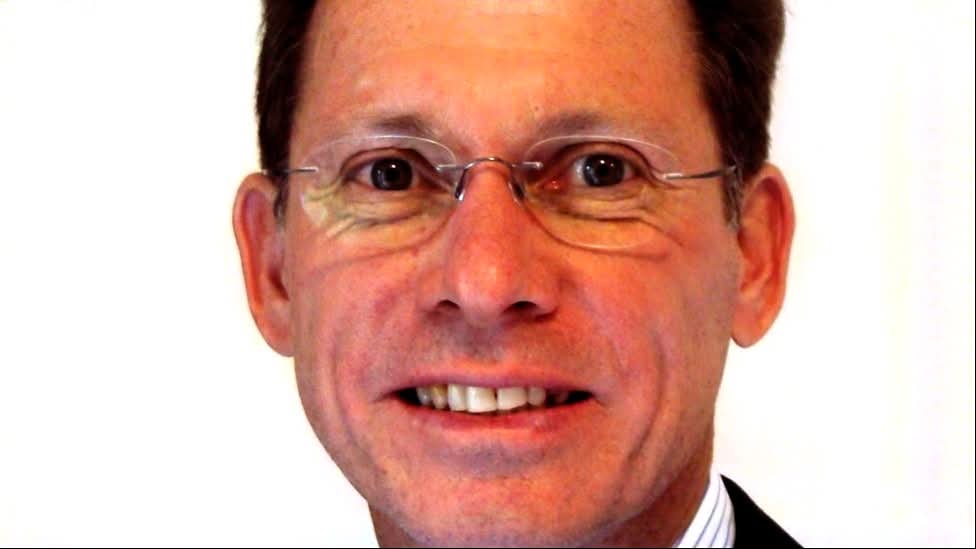
The institutions he invokes, such as WMC, Shell, NNPC, and the Nigerian presidency, cast a long shadow, and there is no doubt that someone named Stephen Davis did move through some of these worlds. Reporters in Australia and Nigeria have spoken to him, quoted him at length on Boko Haram and the Niger Delta, and watched him shuttle, at some personal risk, between gunmen and government men. His presence in those crises is documented; what is less clear is the exact nature of his mandate. Was he a formally gazetted adviser or an unofficial fixer, a consultant retained off balance sheet, or something in between? In his telling, he is at the centre of the action: designing strategy, drafting accords, persuading presidents. In the institutional record, if he appears at all, it is as a voice quoted from the margins.
His latest reinvention, as the face of Jupiter Lithium and its Nigerian offshoots, sharpens the question rather than resolving it. Here the rhetoric grows more expansive: a “Tier 1” discovery in Kaduna, an industrial district anchor meant to sit alongside the lithium boom already under way in Nasarawa and to help leapfrog Nigeria into the battery age. His involvement is orchestrated as the strategic partnership Nigeria supposedly needs to refine lithium into high purity feedstock for a global EV supply chain. Trade press and company releases present a familiar choreography of MoUs, ambitious production timelines, and confident talk of billions in downstream value. Yet the corporate shell around the vision is as new as 2023, a freshly incorporated vehicle wrapped around a story decades in the making, thinly capitalised and already embroiled in disputes with Nigerian authorities over unpaid licence fees.
Jupiter’s ownership tangle, encompassing Basin Mining, Range Mining and UK registration channels for Nigerian assets, looks to sceptical Nigerian commentators less like a web of disciplined entities tailored for ring fenced, creditor proof project finance and more like the scaffolding for a bet that may never quite crystallise.
For a certain kind of investor or official, the ambiguity is the point of discomfort. They are asked to take on trust not just the geology of a lithium belt or the politics of a Nigerian state but the integrity of a personal narrative with more adjectives than documents. The fact checks do not conclusively unmask a fraudster; there is no smoking gun judgement that strips him of titles or degrees. What they do, instead, is subtract certainty from the myth. Each uncorroborated PhD, each advisory role that cannot be traced back to a government gazette or any other credible official record, moves the reader away from the realm of “business icon” and into the murkier territory of the global consultant, someone who is always near power, rarely fully of it, and whose legacy is written primarily by himself.
In that light, the question “Who, really, is Dr Stephen Davis?” may be the wrong way round. The public record, such as it, offers two superimposed figures. One is the man of his own press: doctor, strategist, peacemaker, chairman of a transformative green minerals venture. The other is a more elusive, contemporary type: an intermediary operating in the gaps between weak states and hungry capital, where titles are negotiable, memories are short and due diligence is often an afterthought to the promise of the deal. The distance between those two figures, between what his profiles claim and what the documents can bear, is precisely the space in which any serious partner must decide whether they are looking at a rare asset or an over leveraged story.
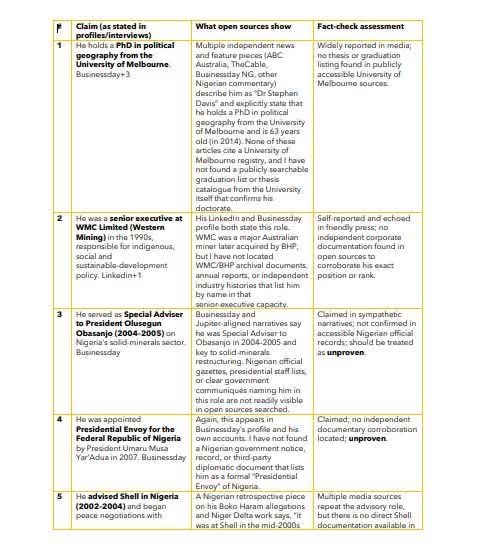
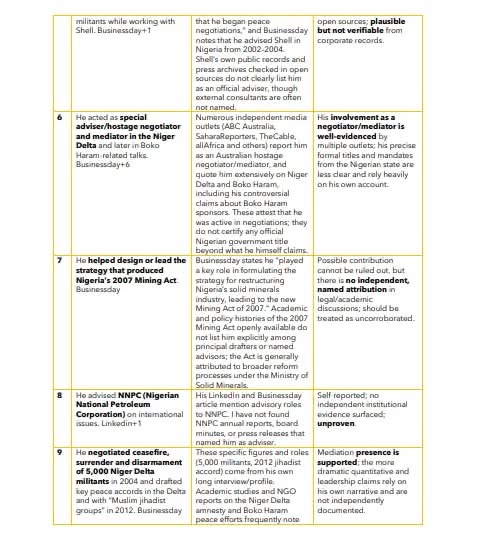
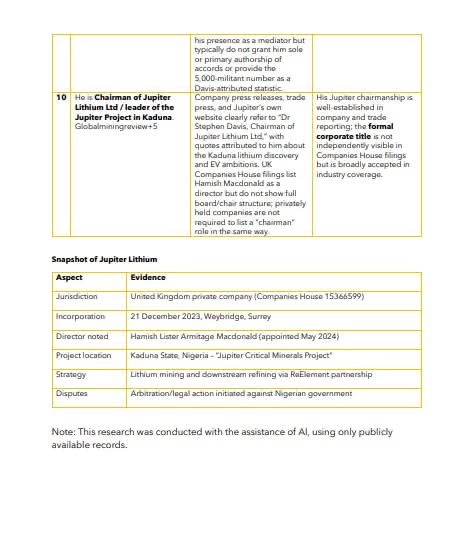
See the accompanying table for a summary of the fact checks, and feel free to run your own.
#nigeria
#mining
#womeninmining
#MiningInAfrica
#lithium
Asiwaju Bola Ahmed Tinubu
WORLD NIGERIANS IN DIASPORA ORGANIZATION
Nigerian Economic Summit Group
Nigerians in the United Kingdom
Nigerians in Diaspora Germany
NIGERIANSABROAD.TV
UK Parliament
