




By Sunday Dare
If President Tinubu’s visit to London was framed as a strategic reset, its conclusion has now provided something more important: proper evidence of execution.
What was once a relationship sustained by legacy is now being redefined by leverage- capital inflows, systems alignments, priorities convergence and stronger economic collaboration.
From Washington to Moscow, from the Skylines of China to Japan and the shorelines of South Africa including the whole of Europe Nigeria’s light shined through. The radar of the global media made it travel faster bearing down on the Nigeria’s transformational leader, President Bola Ahmed Tinubu. The success of his reforms has caught global attention and the UK visit was its signpost.
What began as a high-level diplomatic engagement has translated into a series of tangible outcomes—signaling that Nigeria’s renewed external posture is not merely rhetorical, but increasingly transactional, structured, and results-oriented.
At the center of these outcomes is a landmark agreement: the unlocking of approximately £746 million in UK Export Finance to support the modernization of the Apapa and Tin Can Island ports in Lagos. Signed at Lancaster House, this deal represents more than infrastructure financing. It is a statement of confidence in Nigeria’s reform direction and a concrete step toward resolving one of the most critical bottlenecks in the country’s trade architecture.
For decades, port inefficiencies have imposed significant costs on Nigeria’s economy—raising logistics expenses, constraining trade competitiveness, and limiting industrial scale. The modernization of these two major gateways therefore carries implications that extend well beyond Lagos. It is, in effect, an intervention in Nigeria’s national productivity framework.
But the visit’s outcomes were not confined to infrastructure alone. Across multiple sectors, the engagements reflected a deliberate effort to align capital, policy, and innovation:
The regulatory expansion of Wise into Nigeria’s fintech ecosystem signals growing international confidence in the country’s digital financial architecture, and the continued maturation of its payments and remittance landscape.
The partnership between the Nigeria Sovereign Investment Authority (NSIA) and Asset Green to scale the dairy value chain points to a renewed emphasis on agro-industrial development, import substitution, and domestic value creation.
The Lagos State Government’s digital literacy initiative further underscores the recognition that human capital development remains central to Nigeria’s long-term competitiveness in a technology-driven global economy.
There is the Enhanced trade & investment agreements under ETIP. Nigerian banks and fintechs (e.g., Kuda, Moniepoint, LemFi, Fidelity Bank) are expanding UK operations.
British companies deepen involvement as Twinings Ovaltine launched a £24?million manufacturing facility in Lagos.
Zenith Bank opened a new UK branch In Manchester
Taken together, these developments reflect a coherent pattern:
capital deployment, sectoral diversification, and institutional collaboration.
Equally significant was the tone and substance of the bilateral engagement at the highest level.
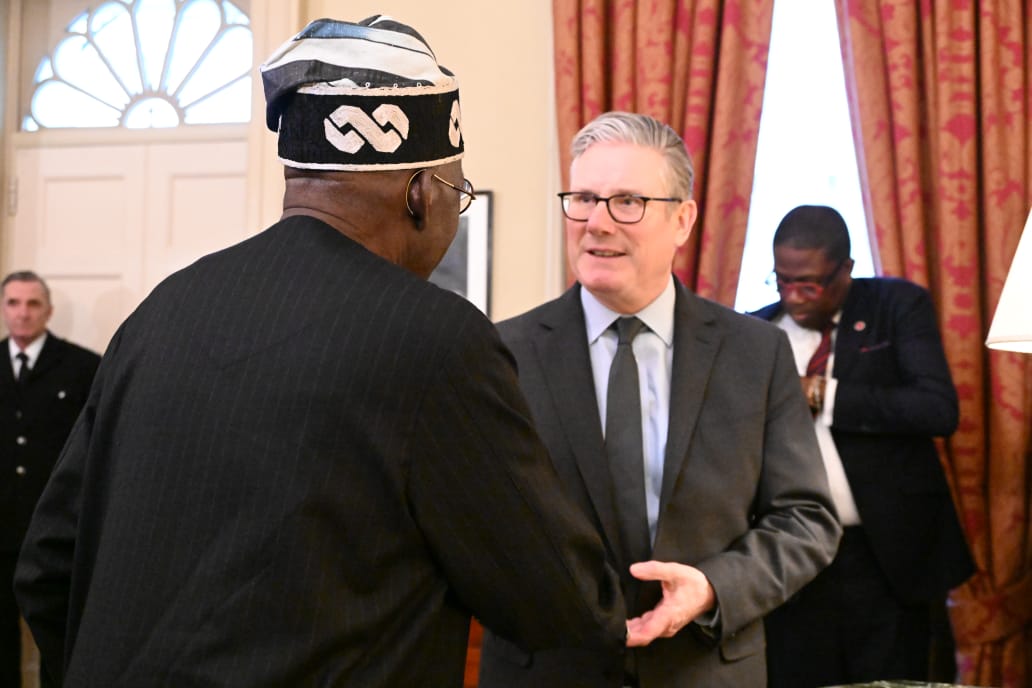
President Bola Ahmed Tinubu’s meeting with Prime Minister Keir Starmer reinforced a shared commitment to deepen cooperation across trade, security, climate, and global economic challenges. The emphasis was not on abstract diplomacy, but on mutual economic advancement and practical collaboration.
The United Kingdom, for its part, signaled a clear willingness to engage Nigeria not just as a historic partner, but as a priority economic counterpart within its evolving global strategy.
For Nigeria, the message is equally clear- the country is entering a phase where diplomatic engagements must increasingly deliver bankable outcomes—investments, partnerships, and measurable economic gains that directly impact growth, jobs, and productivity.
In this regard, the visit can be seen as an early validation of Nigeria’s reform narrative.
Exchange rate unification, fiscal restructuring, and ongoing tax reforms are beginning to reshape external perceptions. More importantly, they are creating the conditions under which international partners are willing to commit capital at scale.
This is the real shift- from engagement to execution and from signaling to substance.
The visit began with the language of history and ended with that of colloquialisms and commitments.
As the King himself famously remarked during his toast, “Naija no dey carry last,” that cultural idiom -warm, informal, and deeply resonant- spoke to an entire nation 3,000miles away, signifying something more than just wit. It hinted at a fraternal ease, a relationship evolving from the rigid hierarchies of a former colonial power and its erstwhile subject into one of mutual recognition and growing parity.
But the visit did not end in sentiment. It closed with a bucket load of commitments—defined, quantified, and consequential, signifying that this parley was indeed, long overdue and actually achieved its intended outcomes.
And that is how partnerships endure: not by memory, but by symbiotic mutualism. This is what President Bola Tinubu achieved within two days in London after a 37year hiatus on a Presidential red carpet on the banks of the Thames.
– Dare is the Special Adviser, Media and Public Communication to President Bola Tinubu.
